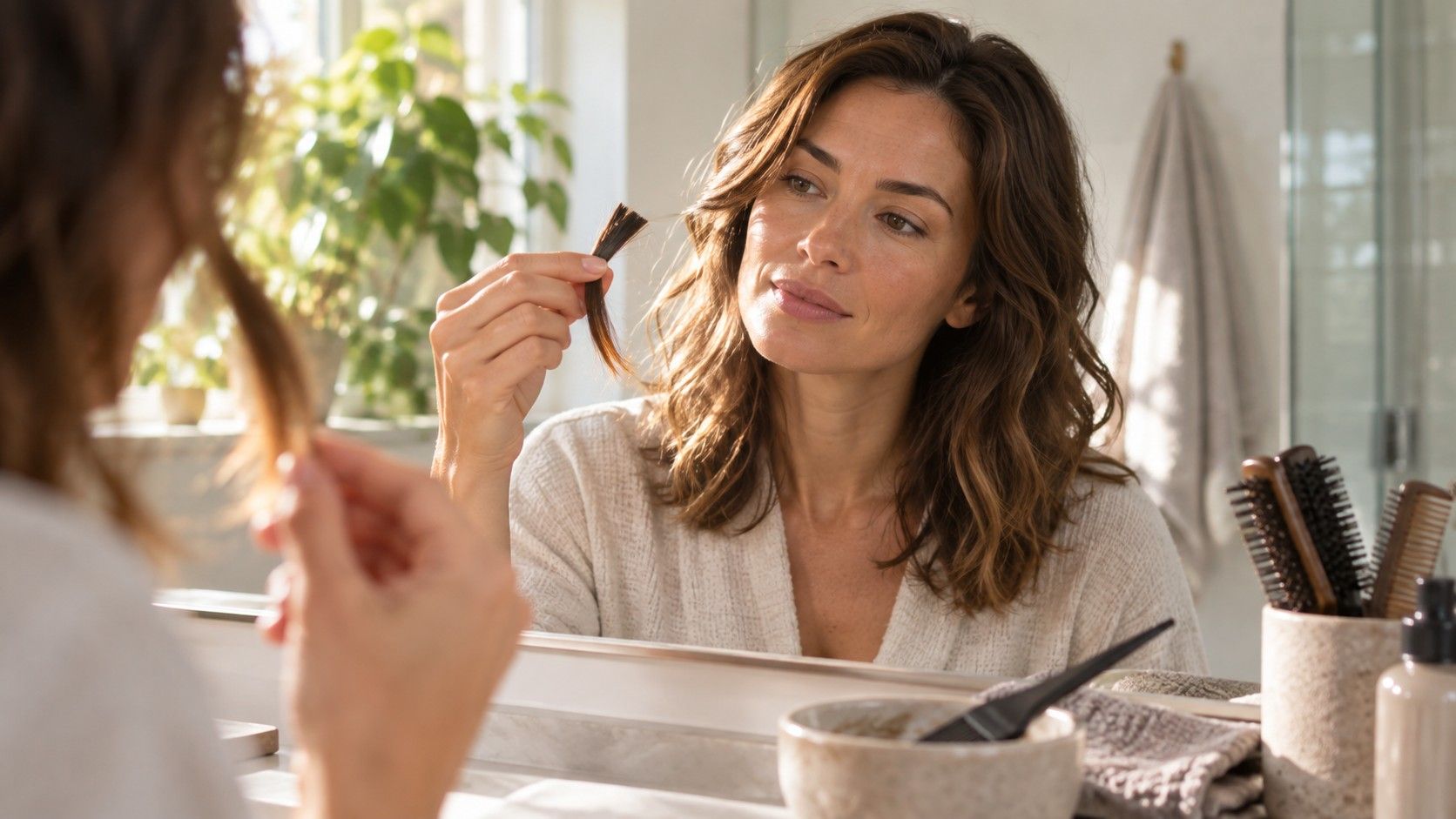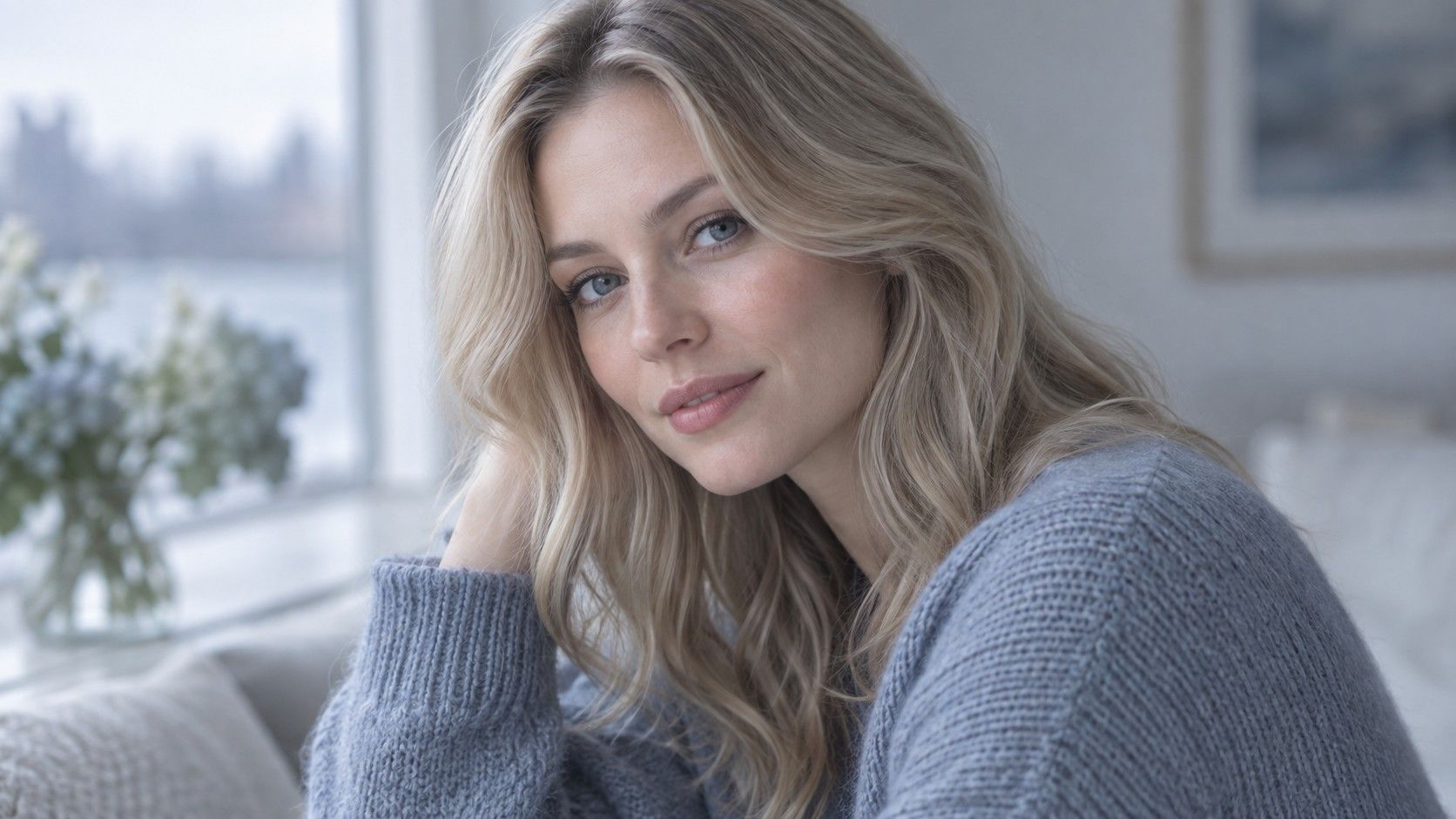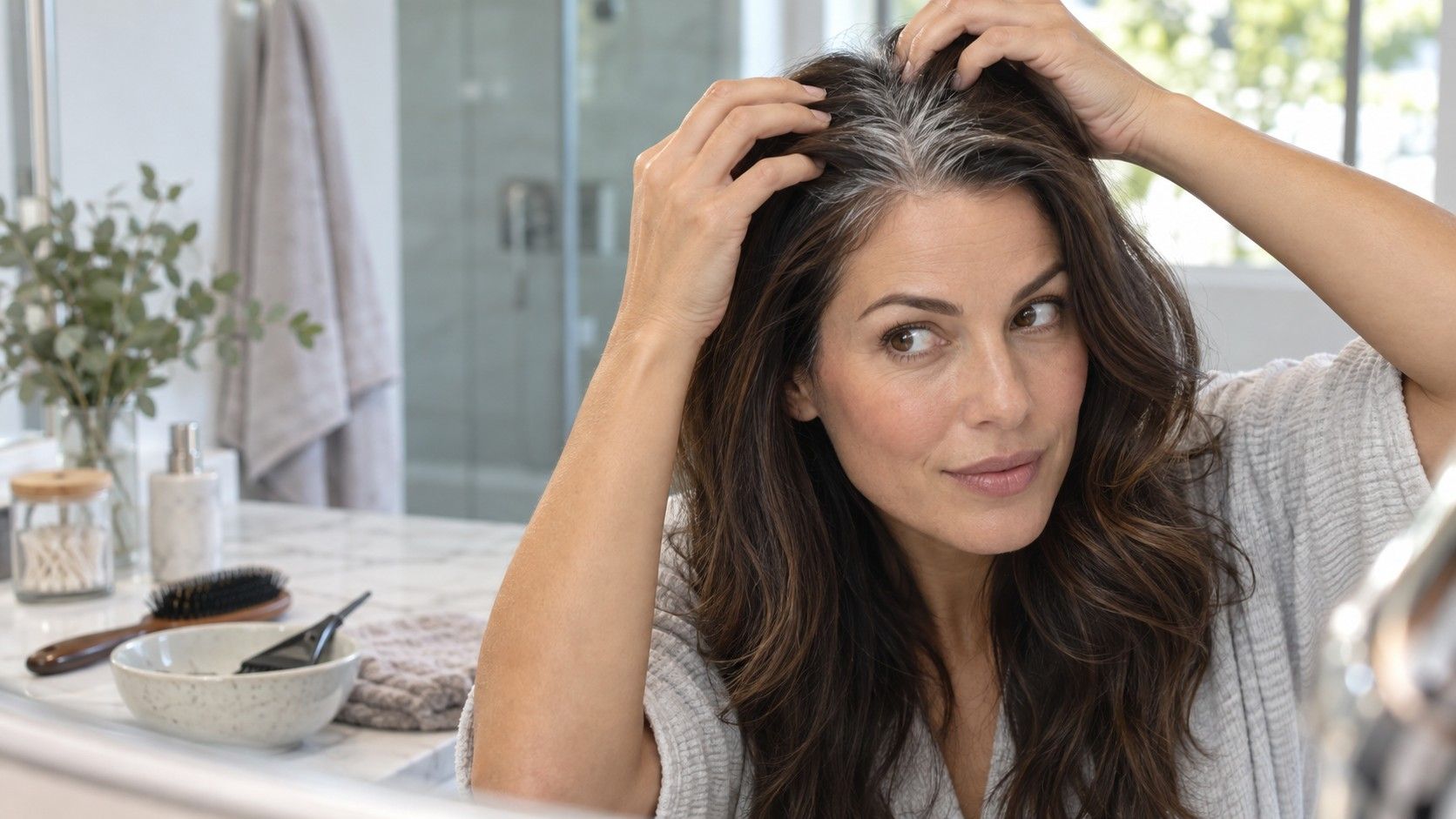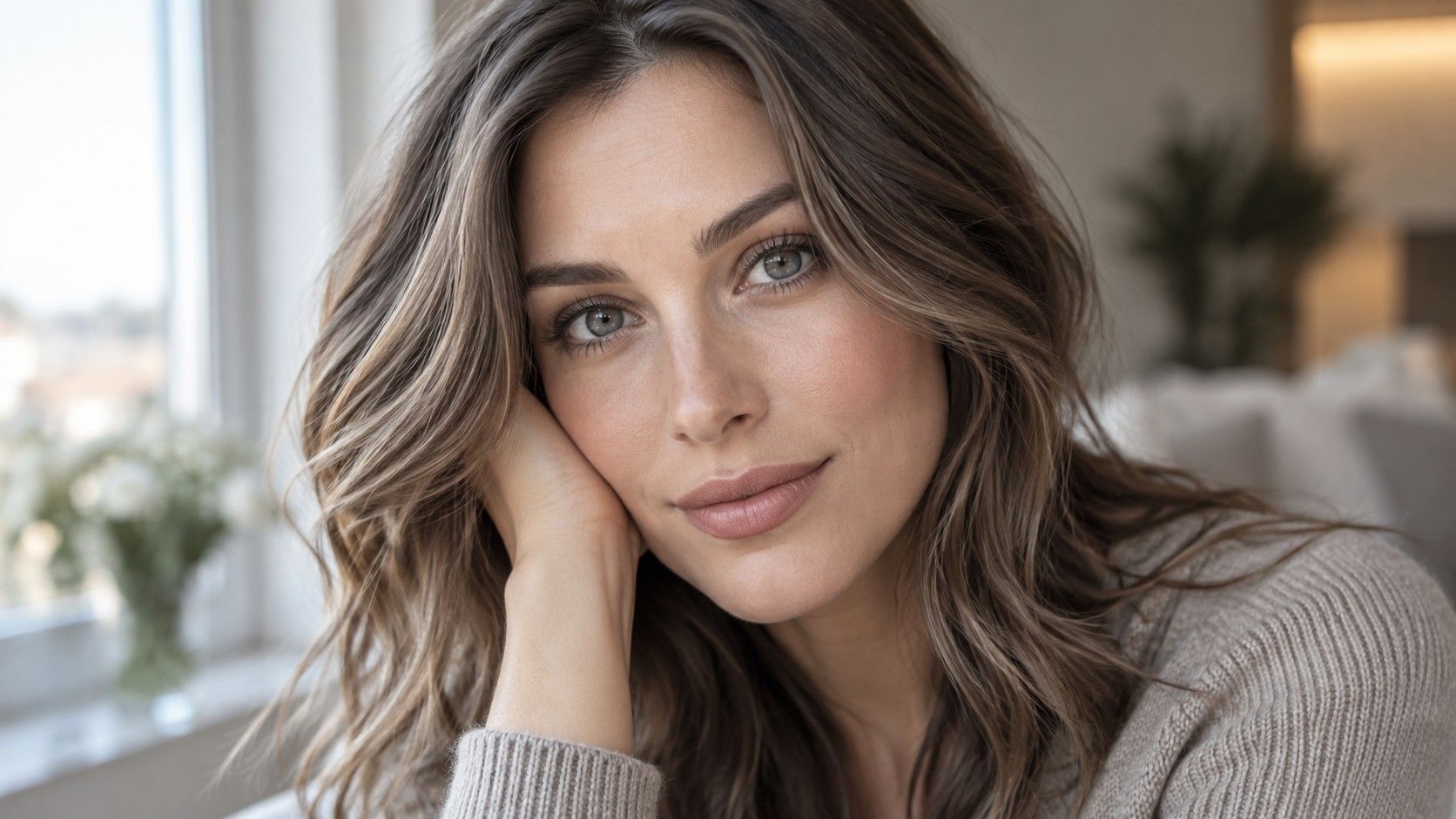
Gray eyes are rarely a fixed color. They can look blue beside a charcoal sweater, green near a warm scarf, and almost silver in a bathroom mirror. That is why the best hair color for gray eyes is less about finding one magic swatch and more about choosing a relationship between your complexion, your natural depth, and the light you actually live in. I would judge a shade at a window, in the car, and after an ordinary wash day before trusting the salon ring light.
Start with the version of gray you see outside the salon
Before picking a blonde, brown, or red, look closely at the eye itself in daylight. Some gray eyes have a blue rim and look clearest beside cool hair; others carry hazel or green flecks that become obvious when a little gold or copper is nearby. Take two unfiltered photos near a north-facing window, one with your hair tucked behind the ears and one with it down. The comparison is more useful than trying to name your eye color from memory.
Lighting can make a dramatic inspiration photo misleading. A smoky ash brown may give blue-gray eyes a clean, steely frame under cool indoor light, yet look nearly flat outside if the skin is warm and the brows are light. Conversely, soft copper can wake up green-gray flecks, but a bright orange formula may pull attention away from the eyes rather than toward them. The useful question is not whether a shade is allowed; it is whether it leaves enough calm space around the iris.
Notice what happens to the whites of your eyes and the skin around them. If a proposed color makes redness, shadows, or yellow tones more visible, the eye color will not rescue it. A client can have striking gray eyes and still look better with a quieter root, more depth at the nape, or a warmer face frame. Those are small adjustments, but they often matter more than changing from brunette to blonde.
Match temperature to complexion, then keep some movement in the hair
Cool or neutral complexions often pair easily with ash brown, mushroom brown, dark blonde, pearl beige, and restrained icy highlights. These shades can echo the silvery quality of gray eyes without making the whole face feel cold. I prefer a softened ash over a solid gray-brown block: a tiny amount of beige or cocoa under the surface gives the hair a reflection instead of a dusty finish.
Warm or peachier skin does not rule out cool color, but it usually benefits from a bridge. A dark blonde with sandy ribbons, a medium brown with caramel only around the face, or a chestnut base with cooler lowlights can make gray eyes read clearer while keeping the skin alive. The bridge is important when the starting hair is naturally dark; lifting it quickly to a pale ash shade exposes warmth that toner cannot permanently erase.
For a grey eyes hair color that changes gently rather than abruptly, ask for dimension in two nearby levels. A deeper root can make a dark blonde look intentional as it grows out, while fine lights near the cheekbones pick up the eyes without producing obvious stripes. This matters especially on curls and waves, where every color placement looks more pronounced than it does on a smooth blow-dry.
| Shade direction | Often suits | Check before committing |
|---|---|---|
| Ash or mushroom brown | Blue-gray eyes with cool or neutral skin | Add a neutral lowlight if your face reads washed out |
| Dark blonde or beige bronde | Gray eyes that shift between blue and green | Keep a shadow root if natural hair is much darker |
| Soft copper or cinnamon brown | Gray eyes with green or hazel flecks | Choose muted warmth if bright orange overwhelms your features |
| Deep espresso with subtle lights | Fair skin and strong brows that handle contrast | Test the depth first; solid black is harder to reverse |
Use fair skin and natural brows to set the contrast level
The familiar search for the best hair color for grey eyes and fair skin can tempt people toward extremes: platinum because it is cool, or black because it is dramatic. Either can be beautiful, but both expose every root line and can make sparse brows look faint. Fair skin is not one condition. Porcelain skin with pinkness, olive-fair skin, and freckled skin will react differently to the same blue-black or pale blonde.
Try a contrast test before a full appointment. Hold a dark towel under the chin, then a medium-brown or dark-blonde towel, and look at the face rather than the hair. If the darkest option makes your eyes appear bright but your skin looks like it needs heavy makeup, that is useful evidence. A level or two softer may give the same eye emphasis on a normal Tuesday, with less effort.
Brows are the other quiet clue. Naturally medium or dark brows can anchor a cool beige blonde or a rich chocolate brunette; very pale brows may ask for a softer transition. You do not need perfectly matching brows, and over-dyeing them is not the answer. But a colorist should see them in the consultation, because they affect whether a cool root shadow reads polished or simply too dark.
Placement can lower the risk of a contrast experiment. Instead of coloring the whole head deep brown, keep a dimensional brunette base and place a few muted lights near the temples. Instead of going full platinum, try a beige face frame over a darker root. Both approaches let gray eyes become more visible while leaving a route back if the shade feels severe after a week.
Translate a photo into a color plan you can maintain
Bring reference images that show your starting level, texture, and desired result separately. One photo may have the right dark blonde depth but the wrong warmth; another may show the soft copper you like around the face. Point to those details. A colorist can work with a clear priority such as “make the gray eyes look brighter, but do not make my fair skin look pink” far better than with a filtered image labelled simply cool blonde.
At home, patch test every permanent or demi-permanent formula and do a strand test on an inconspicuous section. Box names such as ash, neutral, or cool are not standardized; on porous ends, the same formula can grab darker or smokier than it does at the roots. If the hair has old red dye, sun fading, or previous bleach, expect the history to influence the result. This is where a gloss or a gradual change is often kinder than a dramatic corrective session.
Ask what the color will look like after four to six weeks, not only when it is freshly toned. Ash brown may need a gloss to stay reflective, copper needs a realistic refresh schedule, and pale blonde needs help against brassiness without constant harsh shampoo. A hair color for gray eyes succeeds when the eyes still look interesting on an overcast morning and the maintenance fits your life. The most flattering shade is usually the one you can keep looking like yourself in.