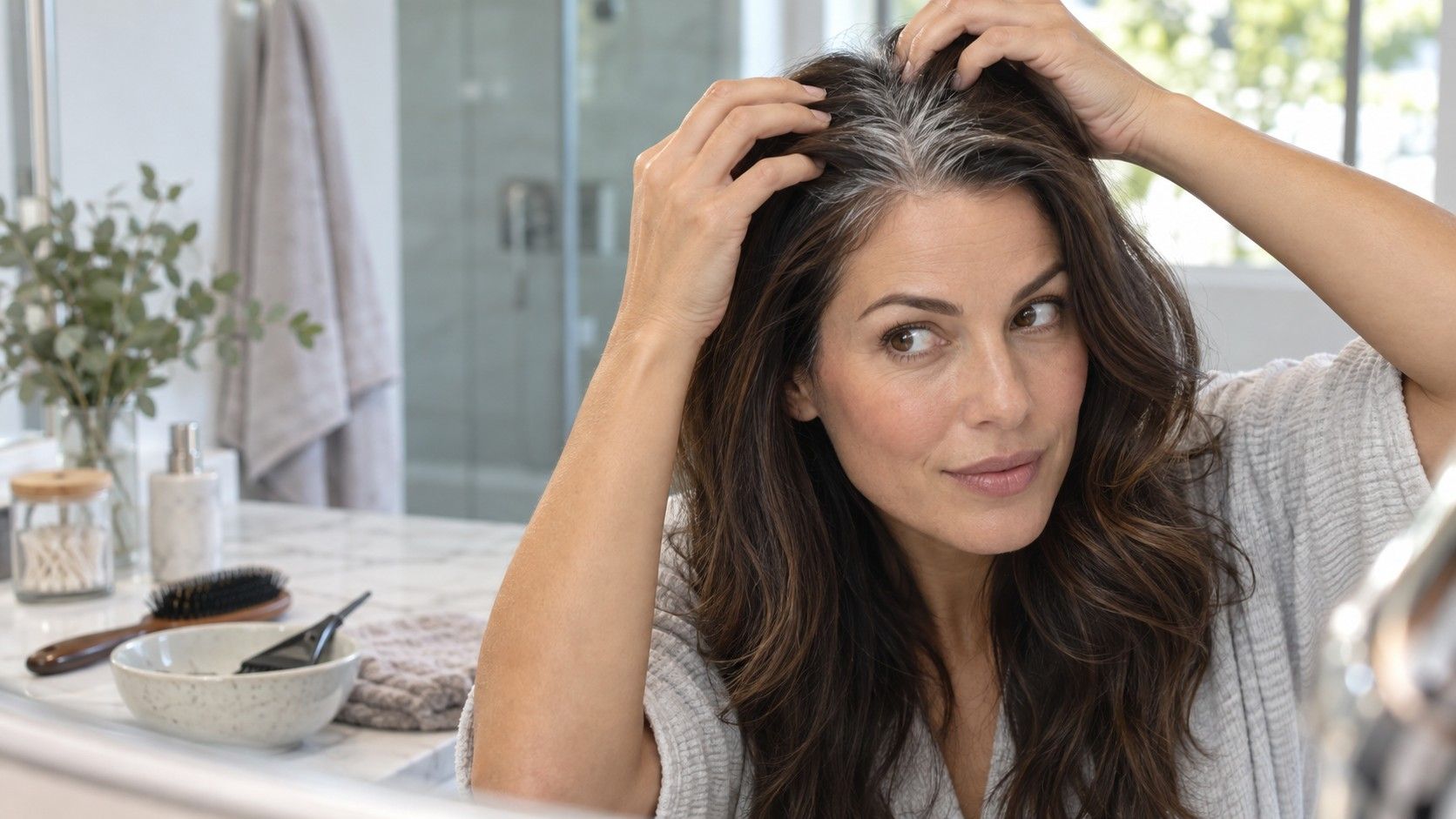
The photo on a dye box is designed to be reassuring, but it cannot know whether your lengths contain old red, bleach, mineral buildup, or three different shades from earlier experiments. Choosing hair dye at home becomes much less mysterious when you treat the box image as an illustration, not a prediction. Read the code, inspect your starting hair in daylight, and test a small section first. It takes more patience than grabbing the prettiest model at the pharmacy, but it is usually faster than correcting a surprise.
Read the shade code before trusting the photo on the box
Most shade systems begin with a number that describes depth: lower numbers are darker, middle numbers are medium brown through dark blonde, and higher numbers are lighter blonde. The exact chart varies by brand, so use the guide printed on that brand’s box rather than assuming one company’s 6 is identical to another’s. A code after the decimal or slash usually describes tone, such as ash, gold, copper, red, or neutral. That secondary code often matters more than the glossy photo.
When learning how to choose hair dye color, compare the color chart with your current root in natural light. Hold a small mirror near a window and look at one clean section close to the scalp, not the sun-faded ends. If you are naturally around a medium brown level, a very light blonde box will not create the pictured result with ordinary permanent dye. Color does not reliably lift previously colored hair either; it mostly adds or shifts pigment.
Words such as natural, neutral, cool, and ash are not universal promises. A neutral brown can look warm on one starting level and smoky on another. Ash is intended to counter warmth, but on porous pale ends it can grab darker or even slightly khaki. If the hair on your crown, mid-lengths, and ends looks different before you start, expect them to accept dye differently. The hair dye shade chart is a guide to a starting point, not a contract.
Check natural level and old color before choosing developer or depth
Separate your natural root from the rest of your color history. Virgin hair, permanent color, demi-permanent gloss, highlights, henna, and dark box dye are not interchangeable canvases. A standard box kit has a developer chosen for its own formula, so do not casually swap or increase it in search of more lift. Stronger developer can increase warmth and damage without delivering an even lighter result, especially on hair that has already been colored.
For gray coverage, the most dependable choice is usually a shade near your natural depth rather than a fashionable color several levels lighter. Resistant gray around the temples may need full saturation and the exact processing time stated by the brand. Very dark color can cover well but shows a pale root line sooner; very light color may blend gray rather than cover it. Decide which trade-off bothers you less before you buy.
Avoid a full-head permanent change when the goal is simply to refresh faded lengths. A color-depositing conditioner, demi-permanent gloss, or root-only application can be more forgiving. Repeatedly pulling permanent dye through old ends is a common way to build dark, dry bands. Those bands are difficult to remove because the hair may be both over-pigmented and fragile at the same time.
| Your starting situation | Safer first approach | Why it helps |
|---|---|---|
| Virgin hair within one or two levels of the target | Follow the brand’s matched shade chart | Results are more predictable on an even canvas |
| Gray roots with colored lengths | Apply permanent dye to roots only, then refresh lengths gently | Prevents repeatedly darkening the ends |
| Faded warm brunette | Choose a close neutral or warm gloss first | Lets you assess depth before adding heavy ash pigment |
| Bleached or porous ends | Strand test and consider a demi-permanent formula | Porous hair can grab tone unevenly |
| Old black dye, henna, or uneven bands | Pause and seek professional advice | Home lifting can produce unpredictable warmth and damage |
Use a patch test and strand test as a real preview
A patch test checks for a possible allergic reaction; it does not show the final shade. Follow the product instructions and their timing exactly, even if you have used other dyes before. Formulas change, and a previous comfortable experience is not proof that a new product is safe. If you notice a reaction or feel unwell, do not proceed. Hair color is not worth treating as a minor inconvenience.
A strand test answers the color question. Mix a small amount as directed, choose a hidden dry strand that includes the sort of hair you plan to color, and process it for the stated time. Rinse, dry, and inspect it under both daylight and indoor light. Do not judge while it is wet: wet hair is darker and more reflective. Check not just the shade but the condition, elasticity, and whether the ends took more pigment than the root area.
This test can reveal a simple adjustment. Perhaps the chosen level is good but the ash tone is too strong, or the color is right at the root but too dark on old ends. You may decide to choose a neutral instead of a cool version, shorten contact on porous lengths according to the instructions, or use a gentler deposit-only product. A small result is valuable information; trying to solve it by layering another box over the whole head usually makes the evidence harder to read.
Know when home dye is not the safe choice
At-home dye is best at staying close to the current level, covering or blending gray, deepening a faded shade, and making modest tone changes. It is not the dependable route from dark dye to clean blonde, from uneven bleach to an even neutral brown, or from recent black color to bright copper. Those changes require an assessment of underlying pigment and hair strength that the front of a box cannot provide.
Pause if the scalp is irritated, if the hair breaks when wet, or if you do not know what has been used on it. Henna and some metallic-salt products are particular reasons to get professional advice before chemical processing. The same applies if you have several visible bands or want to correct a green, orange, or nearly black result. More dye rarely works as an eraser.
The best hair dye shade is often the one closest to a realistic starting point, with a plan for what happens after it fades. Buy enough product to saturate thick or long hair, protect the hairline according to the instructions, use a timer, and do not save leftover mixed dye. Then assess the dried result for a few days before making another change. A calm, well-observed adjustment will look better than an emergency correction made in the same bathroom light that caused the first surprise.