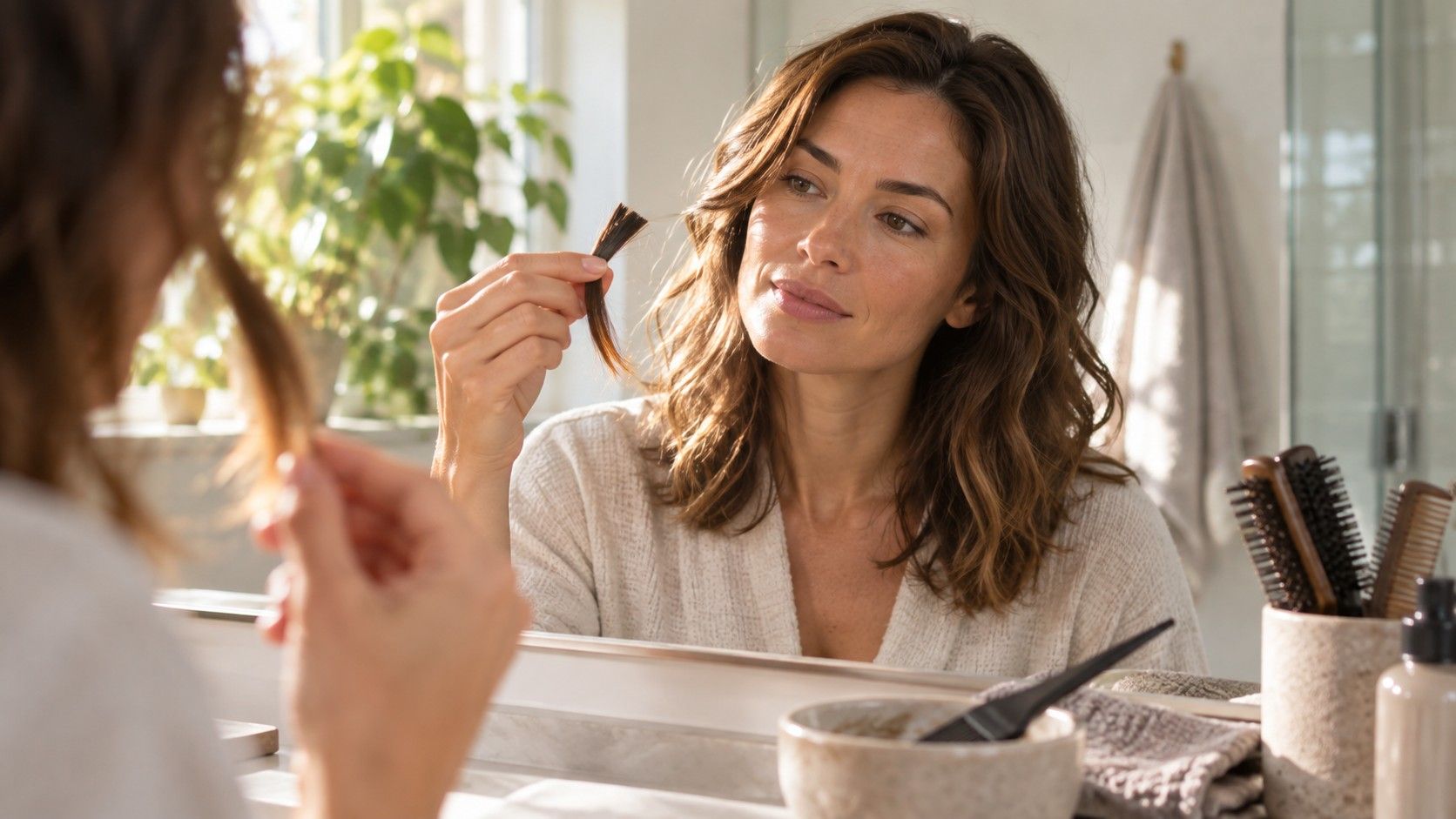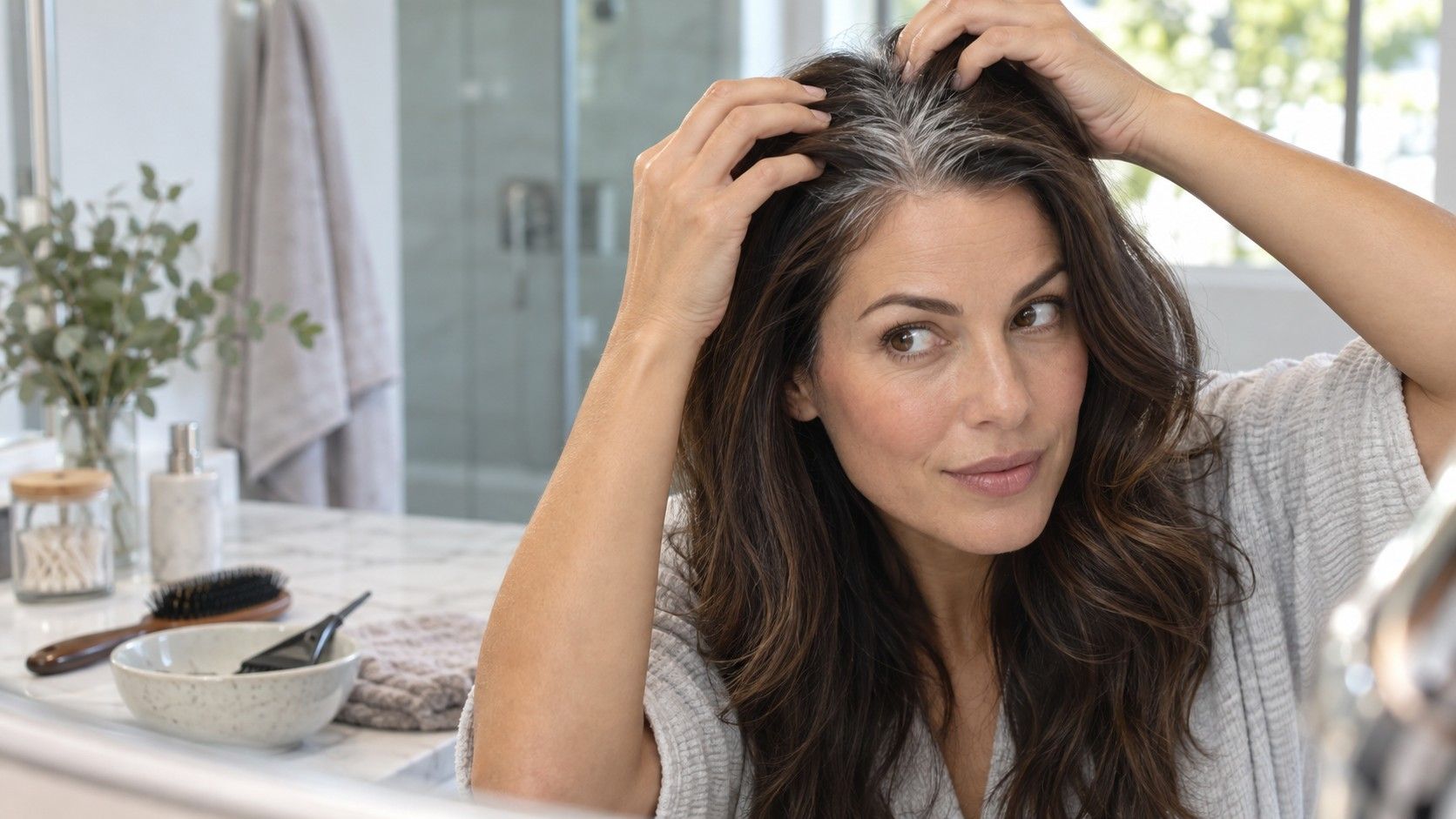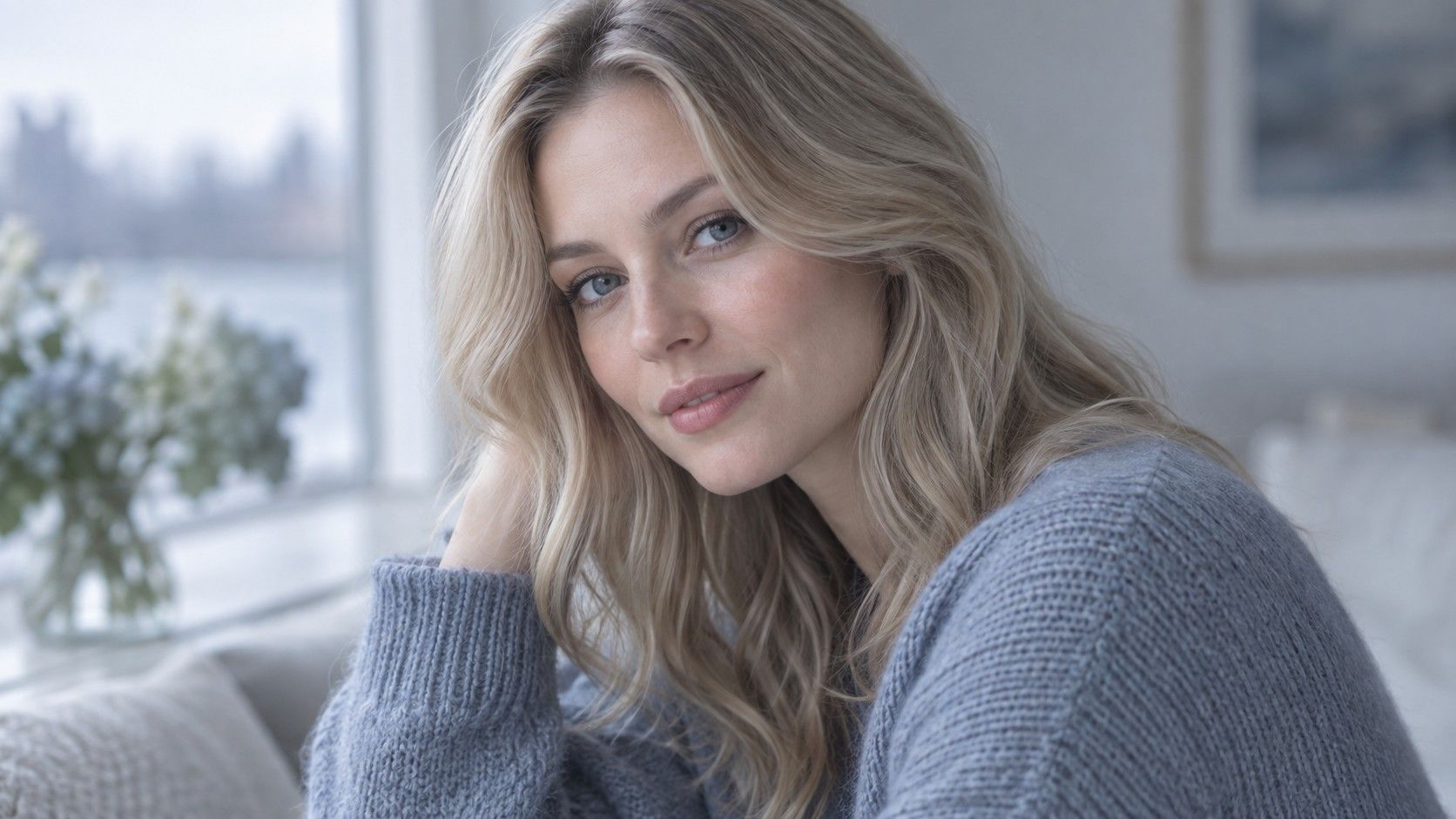
Cool Summer hair color is less about finding the iciest blonde in a swatch book than keeping the whole picture quiet enough. This palette usually has coolness, softness, and low-to-medium contrast working together. A shade can be technically cool yet still look oddly loud when it is too dark, too bright, or too metallic beside the face. The useful question is not whether a color has ash in its name. It is whether the result leaves the skin looking even and the eyes visible before the hair color announces itself.
What a Cool Summer shade looks like in ordinary daylight
Start near a window, without direct sun and without a bathroom bulb turning every brown warm. Cool Summer often reads as a softened version of cool: blue-gray eyes, grayed green eyes, rosy or neutral-cool skin, and natural hair that may look taupe, smoky brown, dark blonde, or mousey rather than distinctly golden. That word “mousey” has done plenty of harm. In many cases it is simply a muted base that makes the face look more balanced than a dramatic salon formula would.
A practical test is to hold a warm camel knit and a faded blue-gray shirt near the face. If camel makes redness or shadows more obvious while the blue-gray fabric calms them down, hair with a similar softened cool direction is often easier to wear. This is not a diagnosis. It is a useful check before committing to a salon appointment or a box labeled “cool brown” that may still contain a lot of gold.
Coolness alone is not the finish line. A silver-beige blonde can be too pale and create a blank effect; a blue-black brunette can make delicate coloring look severe. Think mist rather than chrome: the best hair colors for Cool Summer tend to have a veil of gray, beige, mauve, or smoke over the base color.
Soft blondes and brunettes worth comparing before you dye
For dark blonde or light brown natural hair, ash beige, mushroom brown, and cool sandy blonde are usually more forgiving than a stark platinum lift. They retain a little depth at the root, which matters when brows and lashes are not very dark. Ask to see the swatch outdoors. Under salon lights, a beige blonde may look cool; in daylight it can reveal a buttery band that turns the whole result warm.
| Direction | Why it can suit Cool Summer | What to watch for |
|---|---|---|
| Smoky dark blonde | Matches low contrast and gives a natural-looking lift | Too much pearl can look silvery rather than soft |
| Mushroom brown | Its taupe cast keeps brown from reading orange | Very dark roots may make the face look washed out |
| Ash beige blonde | Offers brightness without clear yellow | Needs enough underlying lift or it can turn khaki |
| Rose brown | A muted mauve reflection can flatter cool skin | Choose dusty rose, not bright berry or copper pink |
There is a reason mushroom brown keeps showing up in conversations about hair colors for Cool Summer. It is not a single formula. It is a visual family: brown softened with taupe or ash so it does not compete with a gray-blue eye or a muted lip tone. A photo reference helps more than a name. Save examples with similar starting depth, texture, and lighting; a sleek studio image of a level-seven brown tells you very little about curly level-five hair in a humid climate.
Highlights deserve restraint. Thin, diffused ribbons around the face can add movement, while broad high-contrast stripes often do the opposite of what Cool Summer needs. If the first thing people notice is the contrast between stripe and base, the placement is likely too obvious. A lived-in blend with a cool gloss tends to stay harmonious longer as it grows out.
When darker hair still works, and when it becomes the whole conversation
Cool Summer is sometimes told to stay light, which is too blunt. A medium cool brunette can be excellent when the natural root is already brown, the brows have some definition, and the face does not disappear beside charcoal or navy clothing. The issue is usually not depth by itself. It is the jump from skin to hair. Espresso, ink black, and a hard money piece create a graphic frame that suits higher-contrast palettes more reliably.
Try the low-cost version of the decision first. Clip a deep brown extension or fold a dark scarf around the hairline, then take a plain daylight photo next to one in smoky medium brown. Look at under-eye shadows, not just whether the hair seems fashionable. If the dark option makes the eyes sharper but the skin flatter, a shade one or two levels lighter may be the sensible compromise.
For someone covering gray, this matters even more. A very dark permanent color can leave a clear light regrowth line in two or three weeks and invite repeated root processing. A softened level-five or level-six cool brown may look less dramatic on day one, but it often produces a kinder grow-out and less visible demarcation. Good color choices are allowed to be practical.
How to avoid brassiness without washing the color into gray
Brassiness is not always a mistake by the colorist. Warm pigment is what sits underneath many lifted blondes and browns, and it returns as toner fades. The first useful detail is to identify the unwanted tone. Yellow in a pale blonde calls for a violet-leaning product; orange in a medium brown needs more blue. Treating every warm shift with the same purple shampoo can leave some pieces dull while failing to touch the orange ones.
Use toning products as maintenance, not punishment. Once a week may be enough for porous ends; leaving a purple mask on at every wash can produce a patchy lavender cast that is cooler but not necessarily more flattering. A cool summer hair color should look airy and muted, not coated in gray. If the ends grab toner faster than the roots, apply a light conditioner to the ends first or shorten their contact time.
Water and heat quietly affect the result. A mineral-heavy shower can make blonde look yellowed; very hot tools can fade a fresh gloss faster than expected. If the change appears suddenly after a beach holiday or a new home, do not rush into another all-over dye. A clarifying wash, a chelating service, or a salon gloss can solve a surface problem without stacking permanent color over it.
A salon consultation that leads to a more believable result
Bring three images: one that has the depth you want, one that has the softness you want, and one that is clearly too warm or too high-contrast. Then say what your hair has been through in the last year: box dye, henna, highlights, chlorine, color remover, medication changes, or simply years of dark tint on the ends. Hair history is more useful than the seasonal label on its own because it tells a colorist what can actually be achieved in one appointment.
Ask where the warmth is likely to show first and how often the plan expects a gloss or root refresh. Those questions separate a lovely reference photo from a maintenance plan. A cool beige balayage may need a toner every six to eight weeks; a deep permanent ash brown may need less toning but a more visible root line. Neither is automatically better. The right choice is the one that fits the time and budget you will still have in three months.
If you dye at home, do a strand test in the area that is most porous and most visible, usually a front piece or faded end, not a hidden section at the nape. Compare it in daylight after it is fully dry. Box photos make every shade look clean and even; your base, previous color, and gray percentage decide the actual outcome. For Cool Summer, stopping one step short of a dramatic cool result is often wise. You can add a muted gloss. It is much harder to make an overly dark or slate-colored result feel soft again.
Keeping the color in tune as your wardrobe and season change
Hair is judged beside clothes all day, not against a salon cape. A color that seems a touch muted in isolation can come alive with soft navy, smoky mauve, cool denim, and pearl gray. Conversely, a bright copper or yellow-gold blonde can look surprisingly warm once it sits beside those same colors. Take a few photos in the pieces you wear most, including the coat or jacket you use in colder months. That is a better reality check than a single mirror glance.
As summer sun, swimming, and frequent washing accumulate, adjust the maintenance before changing the whole formula. A clear shine treatment, a gentle blue-violet gloss, or a few lowlights can restore the muted balance without a drastic appointment. The goal is not to freeze hair at the exact color of the first week. It is to keep the soft relationship between depth, coolness, and contrast that made the color feel like you in the first place.