Deep Winter hair colors work best when they acknowledge two things at once: this palette can hold real depth, and it still needs clarity. That combination is why a rich espresso, blue black, or dark wine shade can look polished beside some faces and theatrical beside others. The aim is not simply to go darker. It is to choose a cool, saturated direction that gives the eyes and skin a deliberate frame without turning every feature into a stark contrast study.
Why depth and clarity matter more than a label on the box
Deep Winter usually has a strong dark-light relationship somewhere in the face: dark hair or eyes, a clear white of the eye, cool or neutral-cool skin, and an ability to wear black, crisp white, cobalt, or deep jewel tones without looking overwhelmed. That does not mean every person in the palette has jet-black natural hair. It means the coloring often carries more visual weight than a muted or low-contrast palette does.
In practice, clarity is the part people overlook. A brown with rusty red, orange, or yellow-gold reflections may be dark enough, yet it can make the skin seem sallow or the eyes less distinct. On the other hand, an inky black with a greenish cast can feel hard even when it is technically cool. Compare swatches next to a clean white sheet and a charcoal one. A suitable deep shade usually looks neutral-to-cool and saturated, not dusty, muddy, or visibly warm.
Lighting makes this more complicated. Salon mirrors tend to flatter shine and conceal warm undertones; outdoor overcast light reveals whether a brunette pulls auburn or whether a black looks flat. Take the consultation photos near a window and, if possible, ask to see a small dried strand after the intended gloss. A cool winter hair colour should still look intentional on a grey afternoon, not only under a ring light.
Espresso, soft black, and blue black are not interchangeable
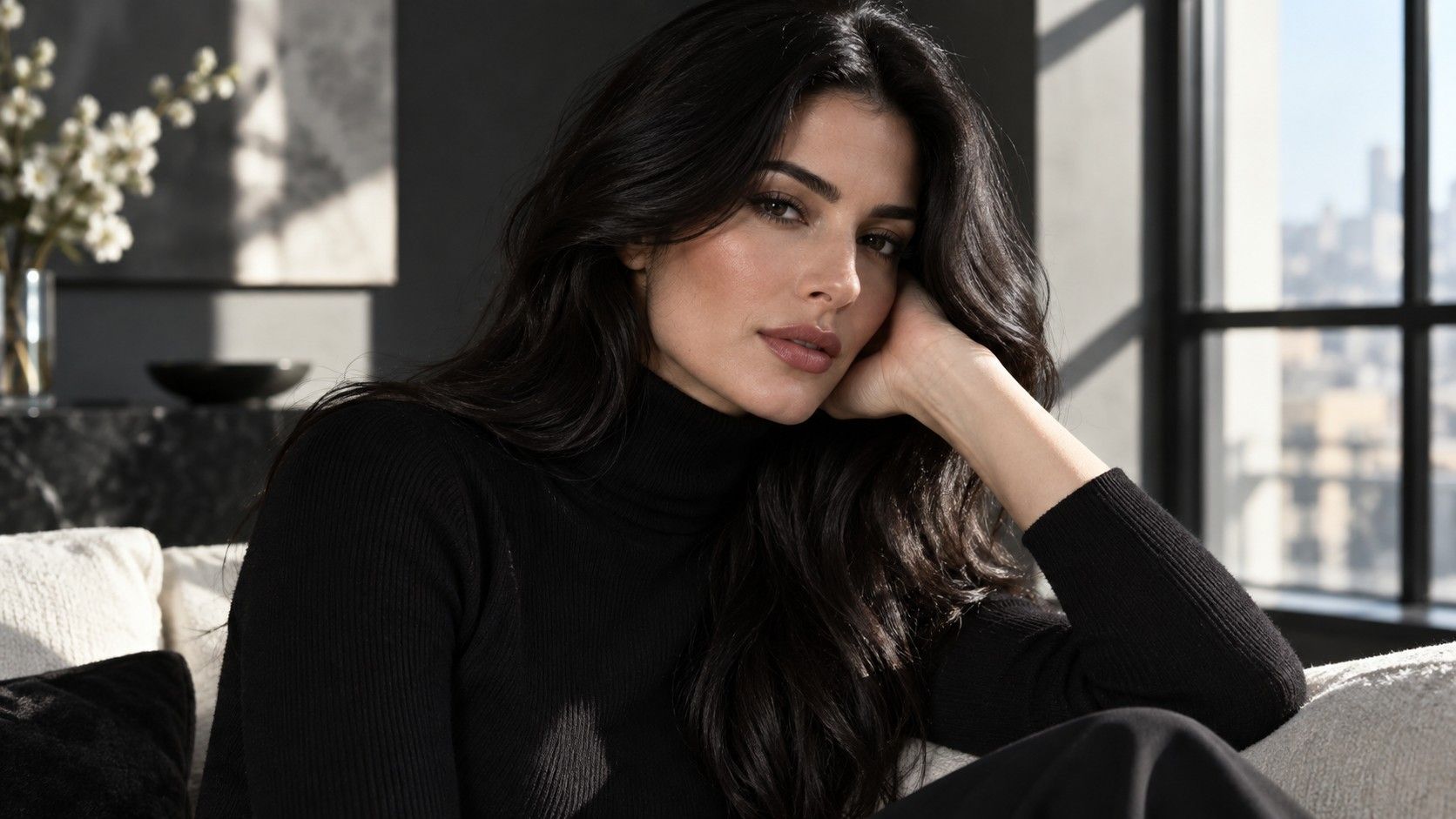
“Dark” is a useful starting point, not a final formula. Espresso often suits someone who wants depth with a little softness: it can read almost black indoors but reveal a cool brown edge in daylight. Soft black is a similarly practical choice for a natural dark brunette who wants more polish without a severe, solid ink effect. Blue black is the clearest and most dramatic option, especially striking when brows, lashes, and eyes already provide strong definition.
| Shade direction | Best use case | Maintenance reality |
|---|---|---|
| Cool espresso | Adding depth while keeping a brown reading in daylight | Gloss can refresh shine without full recoloring |
| Soft neutral-cool black | Natural dark bases that need an even, polished finish | Root line is manageable if natural hair is already deep |
| Blue black | High-contrast features and a preference for a graphic result | Fading can expose warmth; it needs careful gloss upkeep |
| Black-brown with cool face framing | Trying depth without an all-over commitment | Face pieces need tonal control as they lighten |
Before choosing blue black, use the clothing test. Put on a black top, then a charcoal one, and take unfiltered daylight photos. If true black makes the eyes brighter and the skin look clearer, a stronger hair color may make sense. If it emphasizes under-eye circles or makes the complexion look gray, espresso is often the more successful version of dark. It delivers the depth without making the face carry the entire contrast.
Permanent black has a long memory. Color removers, highlights, and even gentle lifting services can reveal orange or red stages underneath, particularly on previously tinted lengths. For anyone who changes direction often, a demi-permanent espresso gloss or a cool black-brown is a far safer first experiment than an opaque permanent blue black applied from roots to ends.
How to use red, burgundy, and plum without drifting warm
Deep Winter can often wear red better than many palettes, but “red” covers an unruly range. Brick, copper, cinnamon, and strawberry usually lead warm. Better starting points are blue-red burgundy, black cherry, wine, cool mulberry, and dark plum. They have enough depth to hold their own next to black clothing and enough blue or violet influence to avoid the orange cast that can make a rich color feel disconnected from a cool complexion.
Ask for a red that looks almost brown in the shade if you prefer a grown-up, low-drama effect. Deep burgundy can flash ruby in direct sun yet return to a dark brunette impression indoors. That is useful for a workplace where vivid red would feel distracting. A brighter violet-red can be beautiful, but it needs a clear plan for fading because porous ends may turn pink while the roots stay wine-dark.
There is also a difference between a color deposit and a lightening service. Adding a plum demi-permanent shade over dark hair can create a subtle reflection without major damage. Reaching a vivid berry from a dark permanent base often requires lifting first, which changes the maintenance and the risk. A strand test tells you whether the underlayer will support the intended burgundy or fight it with rusty warmth. Do not accept a vague promise that it will “tone out later” without seeing the test result.
Face framing should support contrast, not become a stripe
Deep Winter can handle a clearer face frame than a muted palette, yet contrast has to be placed with some judgment. Fine cool ribbons around the face can brighten dark hair and make the eyes more visible. A thick platinum money piece beside an almost-black base can be striking in a photo, but it often creates a disconnected stripe once the toner fades or the hair is pulled back.
For a brunette, cool mocha or smoky level-six pieces are often enough to create dimension. For a black base, a narrow blue-black gloss through the lengths can add reflection without lightening at all. The useful consultation question is where the lightest piece will sit when you wear your hair in its normal part and when you tie it back. A beautiful front highlight that vanishes under a side part is not a practical investment.
Gray coverage changes the plan. If gray is concentrated at the temples, a solid dark root can look compact and demand attention as soon as regrowth appears. A slightly softer cool root with strategically blended lighter pieces may give more breathing room. This is not about making the color less Deep Winter; it is about choosing a root-maintenance rhythm that does not force a full appointment every three weeks.
Keeping a dramatic shade glossy rather than flat
On dark hair, shine is part of the color. Espresso without reflection can look almost matte; blue black without gloss can read as a solid block. Use a color-safe cleanser, reduce very hot water, and put heat protection on before blow-drying rather than after the hair is already hot. These small habits preserve the cuticle surface that reflects light, which is why they make dark color appear richer even before a toner is involved.
Fading tells you what pigment was carrying the formula. If a cool dark brown begins to look reddish after several weeks, the deposit may be washing away and exposing underlying warmth. If blue black turns dull greenish or charcoal, the balance of pigments may need adjustment instead of another heavy black layer. A gloss every six to eight weeks can often restore the tone with less buildup than repeated permanent dye. The exact timing depends on porosity, wash frequency, and how much sun or chlorine the hair sees.
Keep a simple color record after an appointment: the date, the approximate formula family, whether the roots and ends were treated differently, and a daylight photo from the first week. It sounds fussy until you have tried to explain a favorite “dark cherry from last autumn” to a new stylist. A photo record also catches gradual over-darkening, which is easy to miss when every refresh adds pigment to already saturated ends.
Making the choice fit your actual schedule and natural base
The best hair colours for Deep Winter are not automatically the darkest shades available. Start with the natural base and the life you want the color to have. A level-four natural brunette may be able to deepen to espresso with a gloss and enjoy an easy grow-out. A medium brown may achieve blue black in one sitting, but the return path will take more time and likely more corrective work. The dramatic before-and-after is the least useful part of that calculation.
Talk through the maintenance in calendar terms. Do you want a salon visit every four to six weeks for roots, a gloss every couple of months, or a color that fades softly enough to live with between appointments? Black, burgundy, and plum can all be sensible choices, but they ask different things of towels, pillowcases, showers, and future color changes. A clear answer is better than pretending every rich shade is equally low maintenance.
Finally, judge the hair next to the colors you genuinely wear: black coat, winter white shirt, navy sweater, deep berry lipstick, or no makeup at all. A Deep Winter direction should make the face look present, not merely make the hair look expensive. When the shade is right, the contrast feels clean and calm. When it is too harsh, the hair arrives in the room first and the person follows several seconds later.