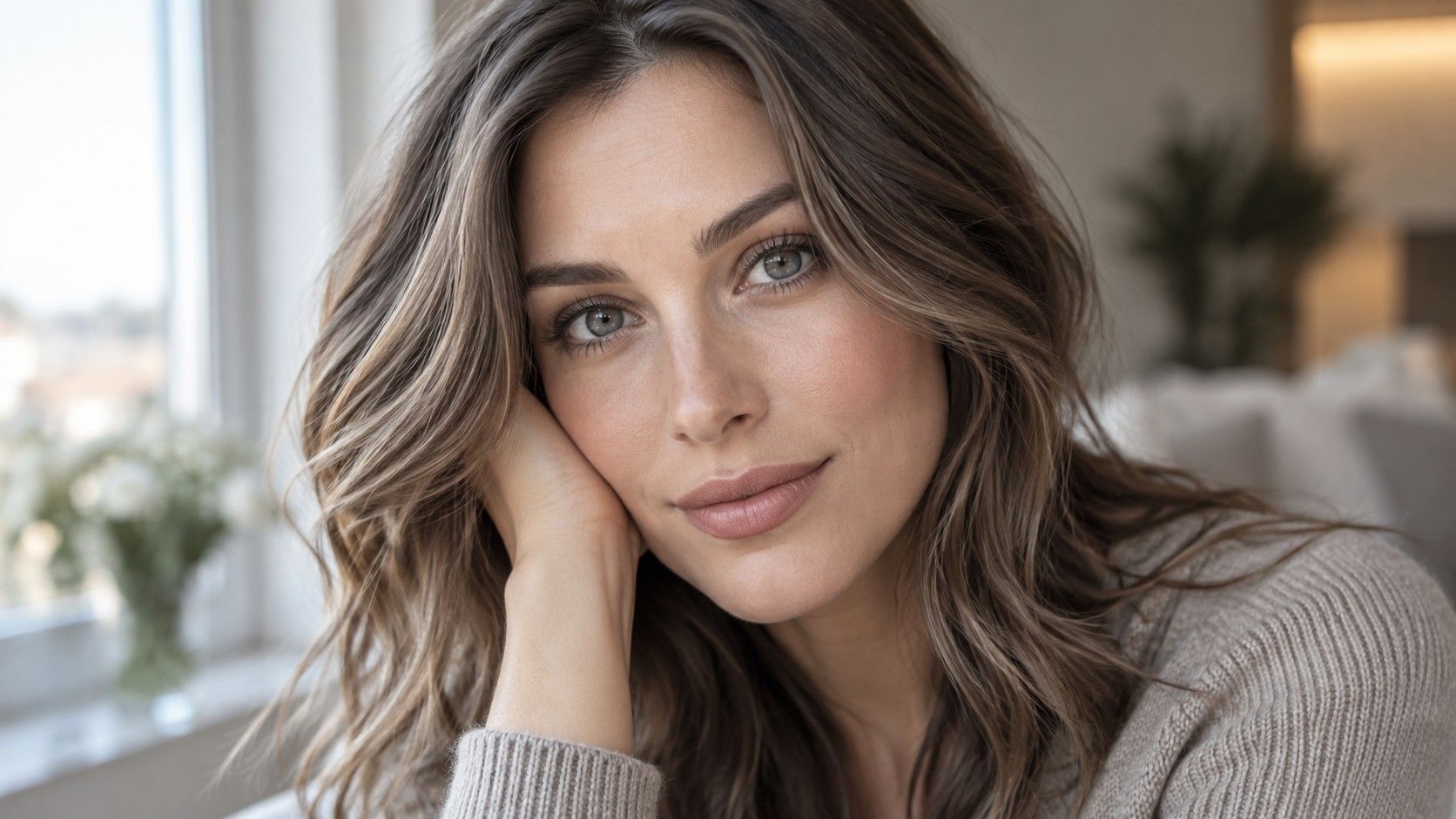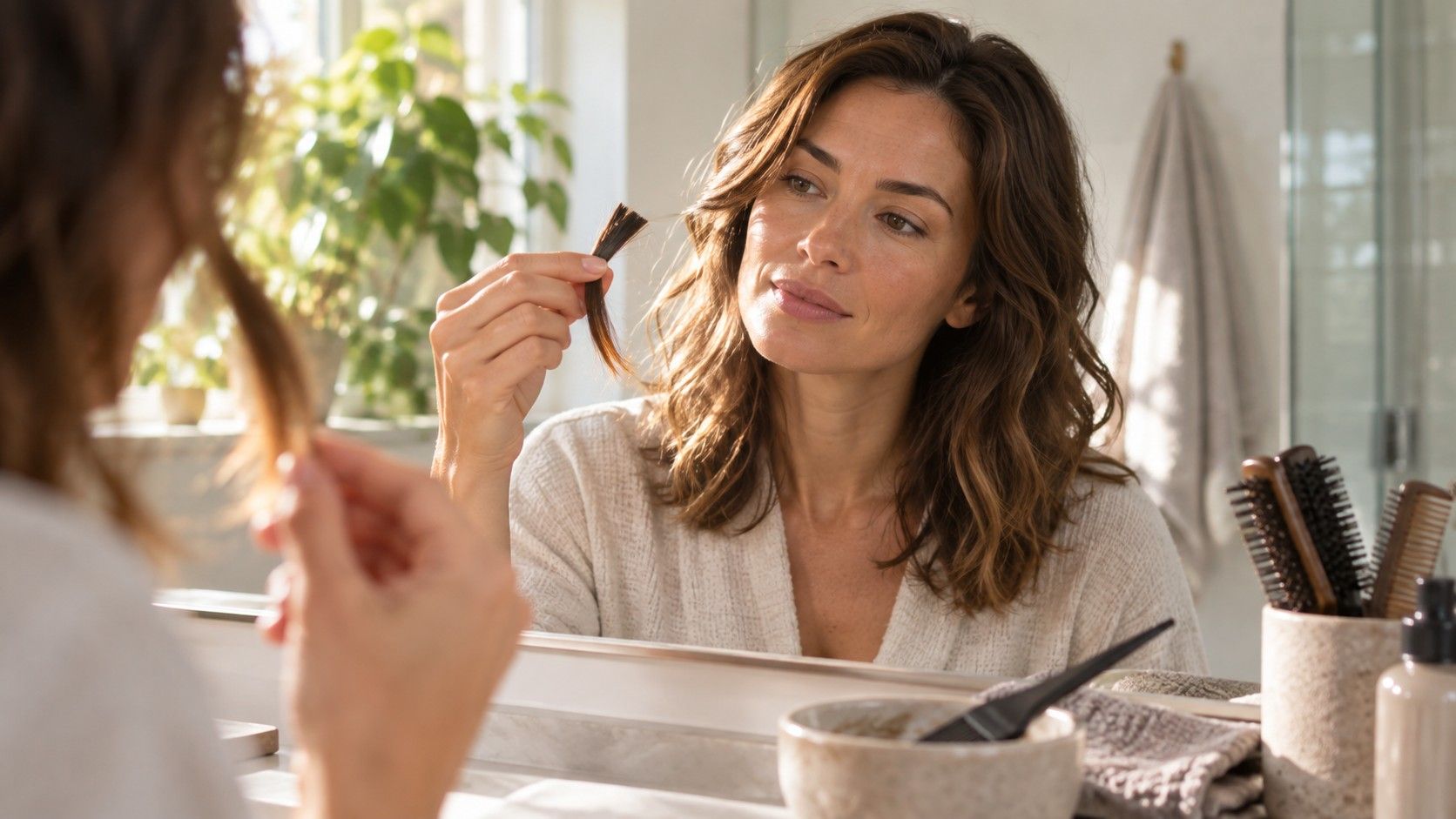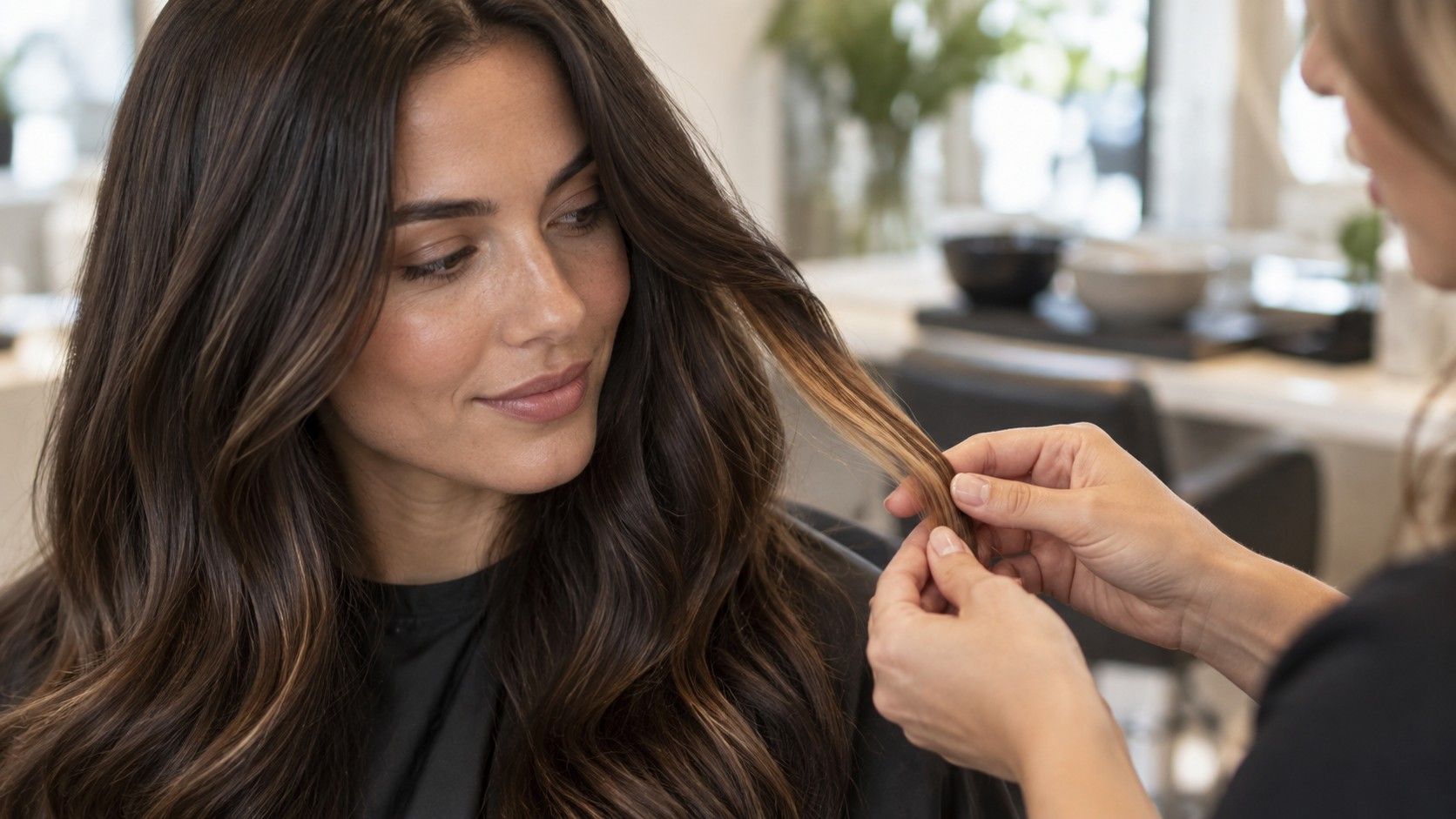
There is no single best hair color for brown skin, because brown skin contains an enormous range of depths and undertones. A caramel highlight that lights up one complexion can look too yellow on another; a cool burgundy that feels refined on olive-brown skin can read purple against a warmer golden base. The goal is not to find a universal approved palette. It is to decide how much contrast, warmth, and maintenance will make your own features look intentional. Start with your natural root. It tells you more than a generic color chart because it already belongs with your brows, eyes, and skin. You can go lighter, darker, warmer, or cooler from there, but it helps to know which element you are changing. The most polished hair color for brown skin often keeps some root depth and adds light or richness strategically, rather than lifting everything to the same level.
Start with skin depth and undertone
Skin depth is the overall lightness or darkness of the complexion; undertone is the cast that sits underneath it. Brown skin can lean golden, red, olive, neutral, or cool, and it can show several of these at once. Daylight is the best place to look. Notice whether gold jewelry seems to glow, whether silver looks crisp, and whether your skin picks up olive or reddish tones next to a white shirt. These observations help, but they should not become a rigid test.
Warm golden or red-leaning undertones often work beautifully with honey, caramel, golden brunette, warm chestnut, cinnamon, and copper-brown. Olive and neutral undertones can handle those colors too, but may also enjoy mocha, smoky brown, wine red, or a cooler beige highlight. Cool-leaning brown skin can make blue-black, espresso, plum-brown, and deep berry shades look especially clear. What matters is the final harmony, not the label attached to the undertone.
Before booking a major blonde change, consider the pigment that has to be lifted. Darker natural hair carries strong red-orange and orange stages during lightening. A responsible plan may take multiple sessions and may leave more warmth than an inspiration photo suggests. That is not failure; controlled warmth can be gorgeous. It simply needs to be part of the design, with enough depth at the root that the color looks rich rather than stressed.
Choose contrast at the hairline, not only at the ends
Face-framing color has an outsized effect because it is the part you see first. A few caramel ribbons around the hairline can brighten warm brown skin without turning the entire head blonde. A soft beige or neutral-cocoa halo can work on olive skin where yellow caramel feels too obvious. Deep brunettes can use a subtle gloss around the front to create movement without any noticeable highlight pattern.
High contrast is a personal style choice, not a requirement. Platinum streaks against very dark hair can be striking, but they need regular toning and careful repair. A softer contrast, such as dark chocolate roots moving into toasted caramel ends, tends to grow out more easily. If you like a bold look but want fewer appointments, place the strongest lightness away from the scalp and keep the root close to your natural level.
Brows are part of this calculation. When hair becomes much lighter, brows may suddenly look more prominent or comparatively dark. That can be attractive, but it should be intentional. When hair goes very dark or blue-black, a naturally soft brow can disappear. Take a plain daylight selfie before and after testing a clip-in or temporary spray near the face; it reveals whether the new contrast supports the whole face rather than just looking exciting in a close-up.
Decide between warm and cool red before committing
Red is not one category. Copper, auburn, cinnamon, mahogany, burgundy, cherry, and plum each contain different amounts of orange, brown, red, violet, and depth. Warm copper-brown and cinnamon can bring warmth and brightness to golden complexions. Mahogany and auburn add depth while keeping a natural-looking brown base. Burgundy and plum-brown can give cool or neutral brown skin a strong jewel-tone effect without demanding a very pale lift underneath.
Ask to see the red in natural light, not only against the salon cape. Many reds look deeper indoors and brighter outside. A well-chosen red should make the skin look vivid, not amplify redness or make the face feel yellow. If you are uncertain, begin with a gloss, a few dimensional panels, or a hidden underlayer. A full opaque red is dramatic and lovely when chosen on purpose, but it is not the only way to wear the family.
Maintenance matters especially with red. Color molecules tend to release during washing, and bright tones can fade unevenly on porous ends. Color-safe shampoo, cooler water, heat protection, and periodic glosses are practical parts of owning a red shade. If you prefer long gaps between appointments, a chestnut base with subtle copper reflect may be more satisfying than a high-saturation cherry that needs constant renewal.
Build dimension that looks rich in everyday light
Dimension is not synonymous with many visible stripes. On brown skin, finely placed lowlights and highlights can make hair look thicker, glossier, and more expensive without creating a busy pattern. A colorist may use a deep root, a middle band of warm brunette, and a few lighter pieces where the hair naturally catches light. Curly and coily textures often reveal color in flashes, so a smaller amount of placement can have a larger effect than it does on straight hair.
| Direction | Effect | Maintenance consideration |
| Caramel or honey ribbons | Warm, sunlit contrast around the face | Gloss when highlights become brassy |
| Mocha and cocoa dimension | Richness with a subtle, neutral finish | Low commitment when root depth is preserved |
| Cinnamon or copper-brown | Visible warmth without a fully vivid red | Refresh tone as it fades through the ends |
| Burgundy or plum-brown | Deep, cool jewel-tone contrast | Protect from frequent washing and heat |
Texture changes how this map behaves. Smooth hair shows bands and lines clearly, so blended placement is important. Curls scatter light and can make a subtle highlight look much brighter near the surface. For tight coils, lifting selected areas may require a slower process to protect the pattern and elasticity. Share your ordinary styling routine at the consultation; a color designed only for a silk press or only for loose waves may not look right on your actual wash day.
Plan maintenance around regrowth and real life
A great color appointment should end with a realistic calendar. Ask how often the root needs attention, how frequently the gloss should be refreshed, and whether your chosen lightness can be maintained without repeated full-head bleaching. A darker root with lighter lengths often gives more time between visits. A solid platinum or high-lift copper near the scalp usually asks for more frequent work. Neither is morally better; they simply belong to different routines.
Bring references that separate the features you love. One photograph may show the depth you want, another the warmth, and another the face-framing placement. This is more useful than saying you want exactly one filtered image. The colorist can then account for your starting level, previous dye, texture, and how much lightening is safe in one session.
The most flattering hair color for brown skin is one that respects the richness already present. It can be glossy black, soft caramel, deep burgundy, warm brunette, bright copper, or a carefully balanced blonde. Choose it for the way it frames your features and for the life you are willing to give it after the appointment. That balance is what keeps the color looking like a decision rather than a temporary effect.