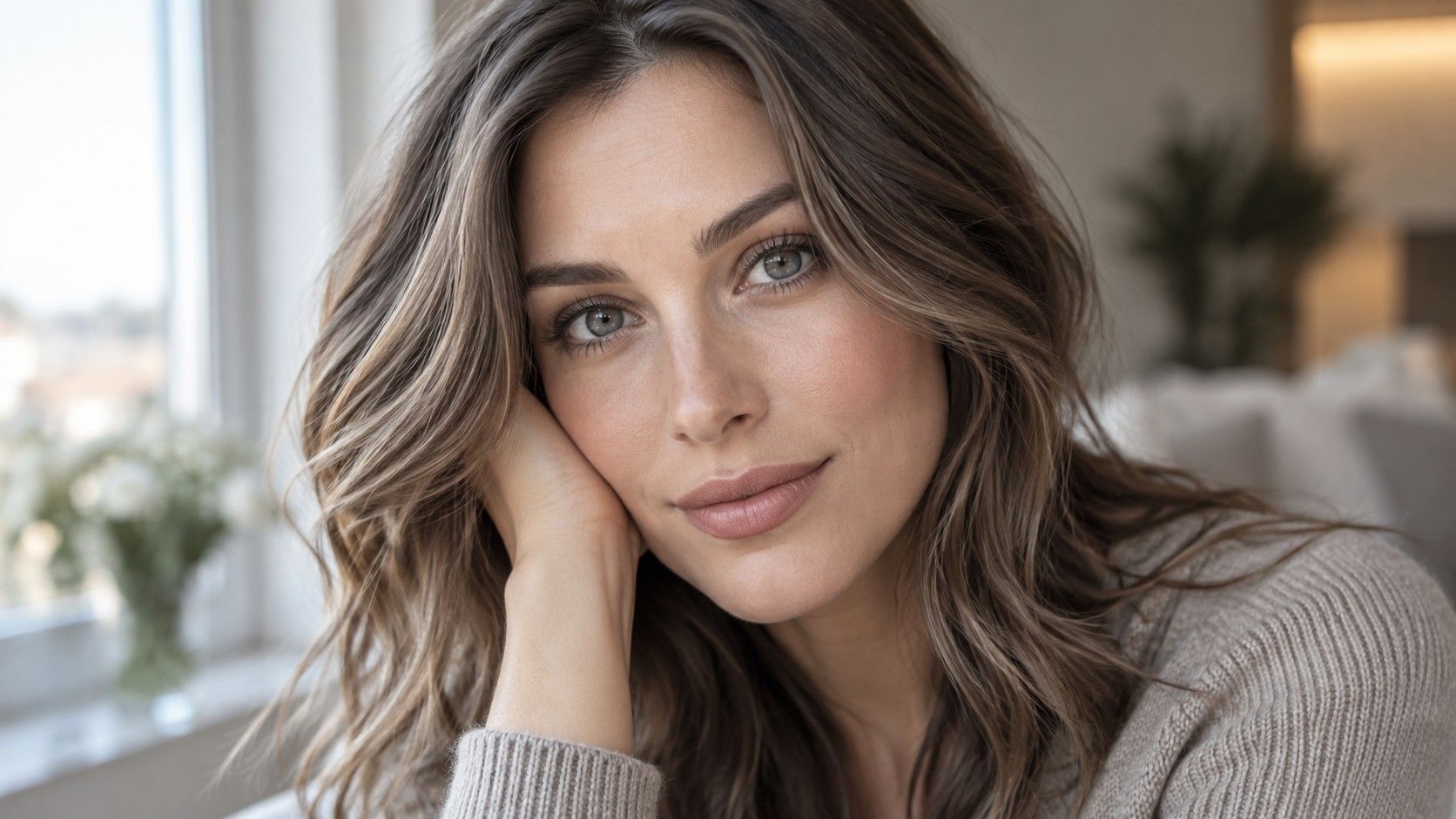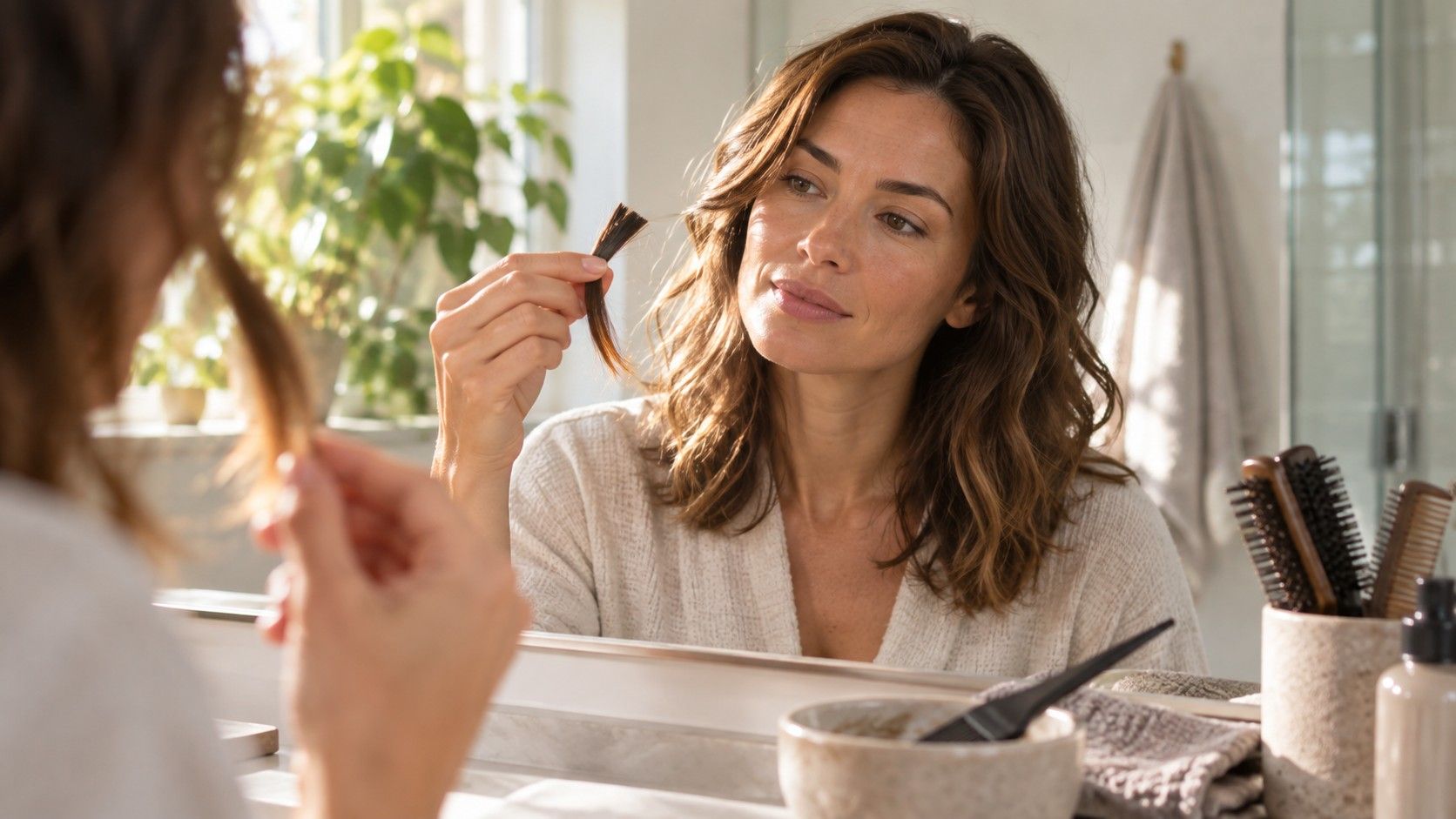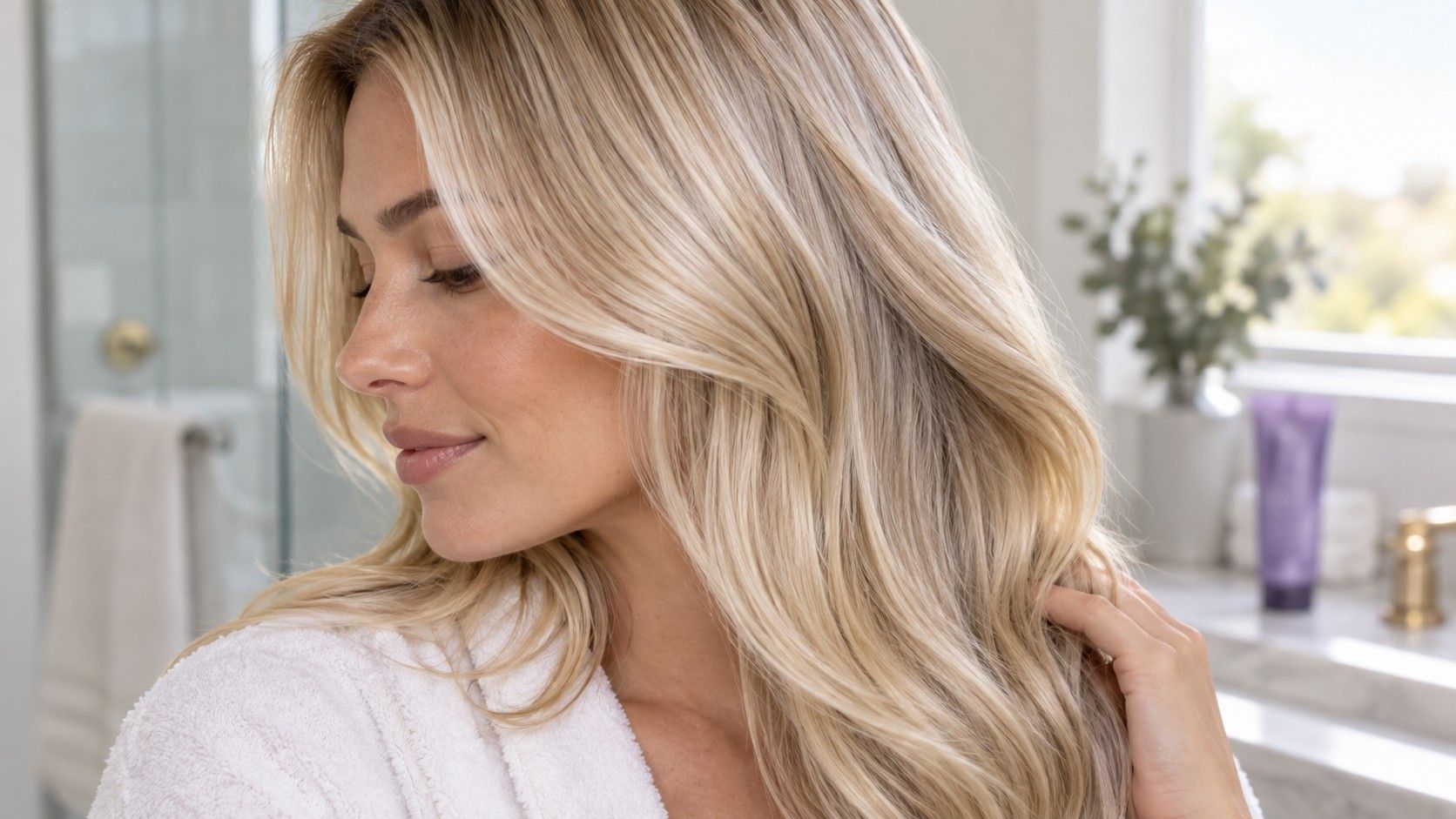
Brassy hair after dyeing is usually a message, not a moral failure and not always a bad color job. Hair that has been lightened exposes warm underlying pigment; toner fades; minerals, heat, sun, and chlorine can shift a once-cool result. The quickest way to make it worse is to reach for the nearest purple shampoo before looking closely at what is actually showing. Yellow, orange, gold, copper, and dull khaki all need different decisions.
Tell yellow brass from orange brass before buying anything
Look at dry hair in daylight, ideally beside a white towel or sheet of paper. Pale yellow often appears in very light blonde pieces, around level nine or ten. Orange is deeper and more obvious in medium blonde or light brown hair that was lifted only to a level six, seven, or eight. Gold can be deliberate and pretty; brassiness is the warmth that feels stronger than the shade you asked for or stronger than the rest of your coloring.
Do not diagnose from a mirror under warm bathroom bulbs. They add yellow to nearly everything, including an ash toner that is fading perfectly normally. Take a photo outside in open shade, then compare the roots, mid-lengths, and ends. If only the ends look yellow, porosity and old toner loss may be the story. If orange runs through the middle but the root is darker, the hair may simply not have been lifted far enough for the cool blonde you want.
This distinction matters because purple neutralizes yellow while blue counteracts orange. Purple shampoo on orange hair may make the lightest pieces a little cooler but will not turn a level-seven orange band into ash blonde. It is like putting a pale filter over the wrong photograph: the issue underneath remains visible.
Use the color wheel as a correction tool, not a dare
| What you see | Opposing tone | Most realistic next step |
|---|---|---|
| Pale yellow on light blonde | Violet | Purple shampoo, mask, or a gentle violet gloss |
| Yellow-gold blonde | Violet with a little blue | Salon toner or blue-violet maintenance product |
| Orange in medium blonde | Blue | Blue shampoo for mild warmth; toner if the orange is strong |
| Red-orange or copper after dark dye | Blue-green | Professional assessment before more home color |
The wheel gives direction, not a formula. A toner also needs the right depth. Putting a dark ash product over pale yellow hair can make it gray, muddy, or uneven. Putting a pale violet product over orange hair may do nearly nothing. Look at the level first, then the warmth. If you cannot tell, choose a mild maintenance wash and reassess after it dries rather than layering a strong boxed ash dye over every strand.
Keep the correction local when the warmth is local. If the front pieces are yellow but the back is already cool, apply a purple mask only to the front rather than soaking the whole head. Hair is rarely one uniform canvas after highlights, balayage, old box color, and heat styling. Treating every section as identical is how a simple fix turns into purple ends and unchanged orange bands.
Where purple and blue shampoo genuinely help
Purple shampoo is maintenance for pale yellow, not a substitute for lightening. Use it once a week at first, or less often on porous blonde ends. Massage it through evenly, watch the time, and rinse before the most absorbent pieces turn lavender. A purple conditioner or mask is often gentler than a strong shampoo because it adds slip while depositing a small amount of pigment.
Blue shampoo is the more relevant option when hair reads orange, especially on brunette balayage, dark blonde, or light brown hair. It can soften a mild copper cast between appointments. It cannot lift the hair further, so it cannot create a light ash blonde from a base that is still too dark. This is the part that advertisements make sound much easier than it is.
Water temperature and technique matter. Apply to thoroughly wet hair, distribute with gloved hands or a wide-tooth comb, and do not leave the product sitting on one dry patch while you work elsewhere. Rinse with cool-to-lukewarm water. If your ends grab color quickly, condition them first or apply the toning product there last. That small adjustment can prevent the familiar pattern of violet tips and warm mid-lengths.
When the problem is faded toner, and when it is an unfinished lift
A fresh salon blonde that warms up evenly after four to eight weeks often needs a gloss or toner refresh. The hair was probably lifted to a suitable pale base, and the temporary cool deposit has simply washed away. A salon can restore the shade without pushing the hair through another lightening session. This is common after holidays, frequent washing, or a summer of pool water and heat styling.
Hair that is orange immediately after an attempted blonde service is different. The underlying level is still too warm for the target. More purple shampoo will not change the chemistry. The hair may need additional lifting, a darker final goal, or time to recover before either option. Insisting on another round at home can leave the cuticle fragile while still not producing an even cool result.
Take account of old color. Permanent dark dye, henna, mineral deposits, and repeated box applications can all change how hair lifts. If you see bands of orange, red, yellow, and pale blonde, do not try to erase them with one all-over ash color. A correction usually needs section-by-section work, and an honest stylist will sometimes recommend a gradual path rather than a single dramatic appointment.
Avoid overtoning and the dull gray trap
Overtoning happens when cool pigment deposits more strongly on porous areas than on healthier ones. The ends may look silver, violet, blue-gray, or even khaki while the roots still look warm. It is tempting to add more toner to the roots, but that increases the difference. Stop, wash gently over the next few days, and let the excess pigment release before applying another strong product.
Hair that looks gray is not necessarily badly toned; a very pale cool blonde can be intentionally pearly. The problem is a dull, uneven cast that makes the hair look coated rather than reflective. Add moisture, reduce toning frequency, and use a clear shine treatment if you want gloss without more pigment. Deep conditioning improves the surface, but it cannot repair a level mismatch or lift dark orange hair to blonde.
Build a small record after you fix brassy hair: which product you used, how long it sat, where the warmth was visible, and how the hair looked after two washes. It sounds overly methodical until you have tried three purple products in a month and cannot remember which one made the ends smoky. A daylight photo is usually more reliable than recollection.
When a professional toner is the calmest solution
Book a professional service when the hair is banded, very orange, fragile, or previously colored with an unknown product. Bring photos from the first day and the current day, and explain whether the color was bleach, highlights, permanent dye, a gloss, or a direct vivid dye. Those details tell the colorist whether they can tone, need to lift, need to remove mineral buildup, or should leave the hair alone for now.
Ask what the realistic result is in this appointment and what will fade first. A good toner appointment is not just a cooler photo at the chair; it includes a plan for shampoo, heat protection, wash frequency, and the next refresh. If your hair is a level-seven orange but your goal is icy level-ten blonde, the safest answer may be a more wearable beige or ash-dark-blonde stage while the hair remains healthy enough for later lightening.
The most satisfying correction is often modest. Neutralize the unwanted warmth, keep enough shine and integrity to style the hair, then revisit the lightness later if needed. That approach may feel slower than another box from the drugstore, but it avoids the cycle of orange bands, purple ends, and increasingly stressed lengths that makes color correction expensive in the first place.