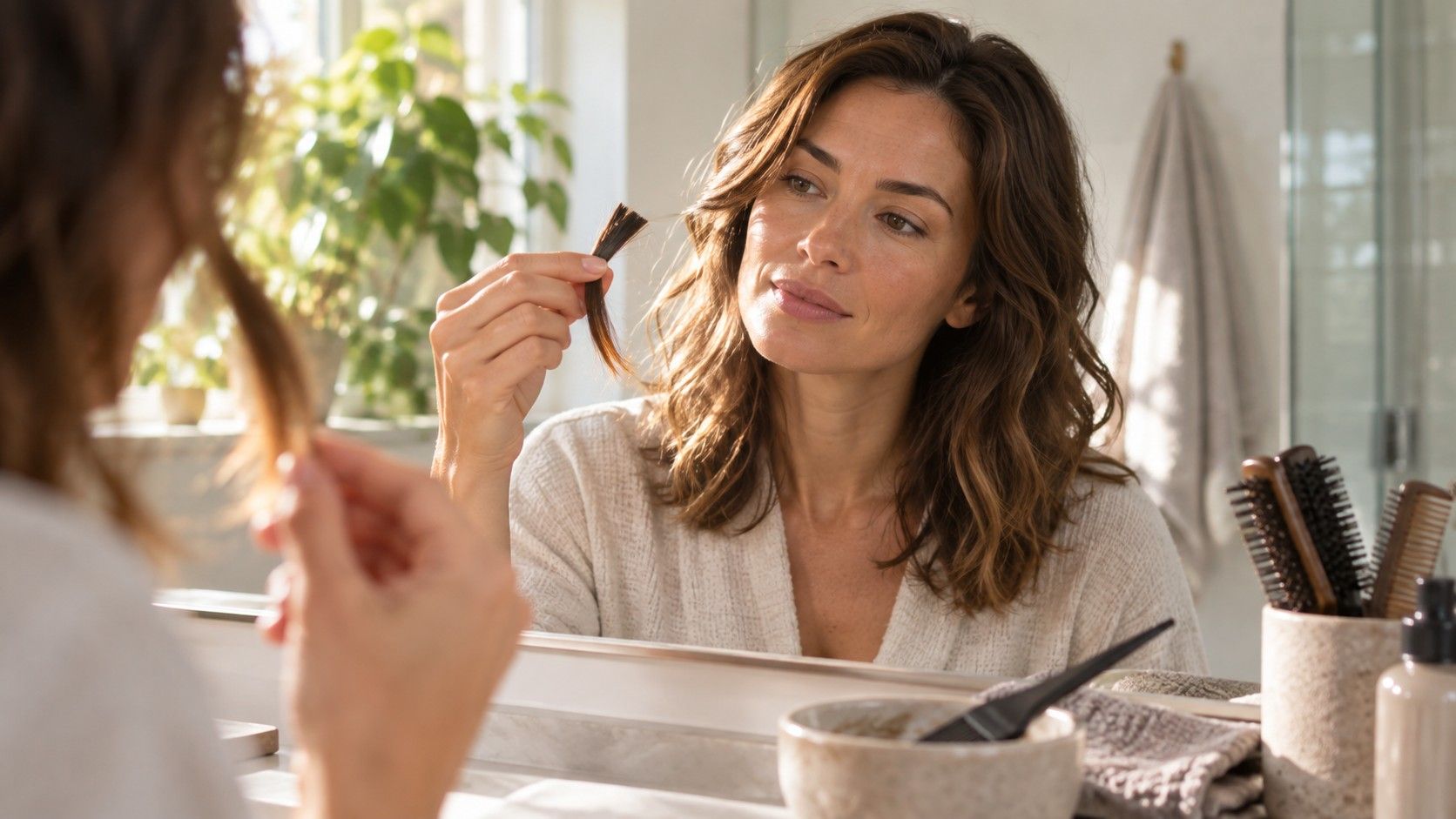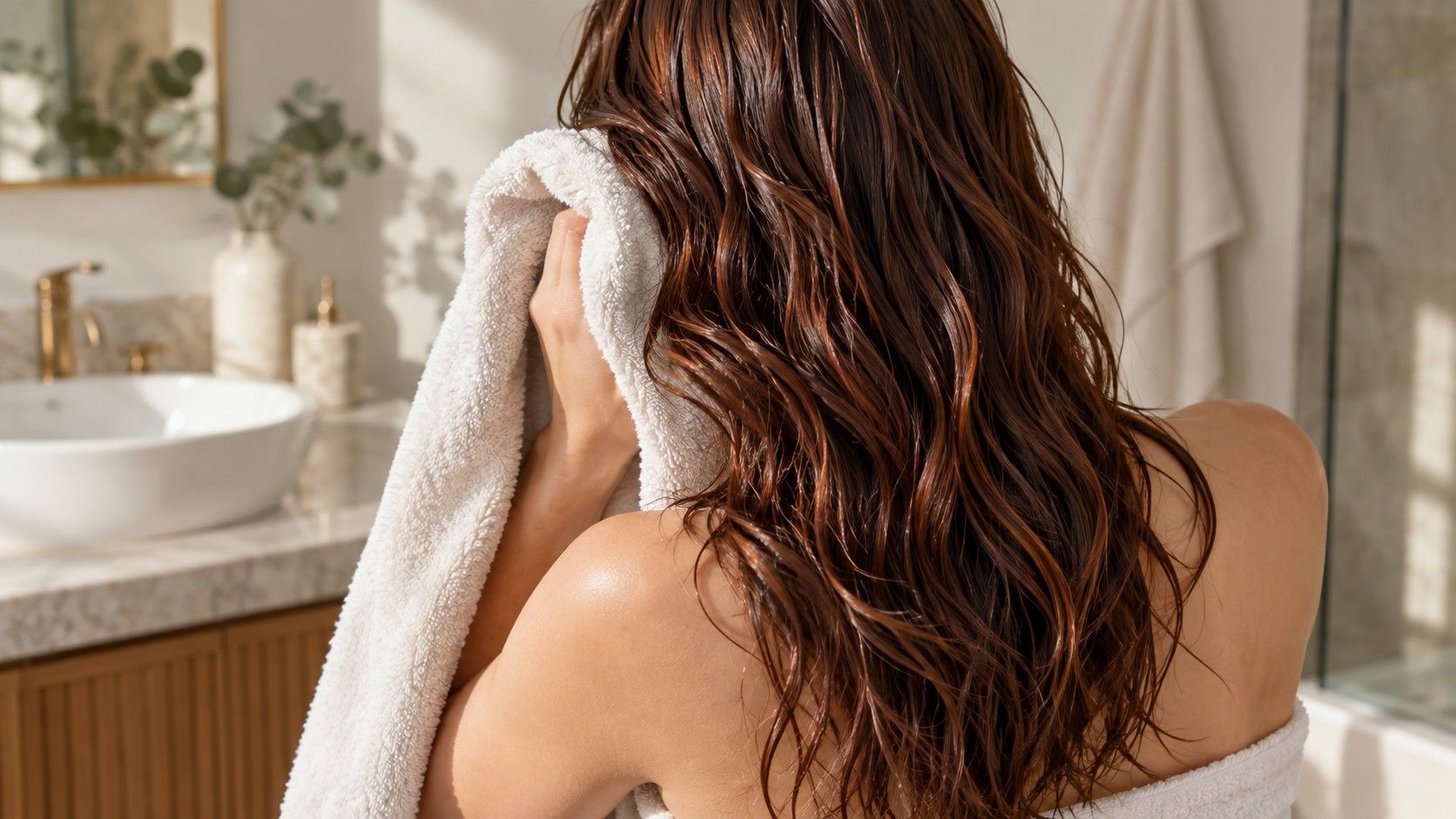
Fresh color usually looks its best when the hair is still smooth from the appointment, the tone is newly balanced, and nobody has rushed it under a hot shower. The difficult part begins at home. Good hair dye aftercare is not about buying every bottle marked color-safe; it is about protecting the pigment and the condition that makes pigment look bright. A routine that you can repeat on an ordinary week will do more than an elaborate rescue session once the color has already gone dull.
Handle the first wash and first week as part of the color service
Follow the timing advice given for your particular service. A salon gloss, permanent root color, direct dye, and at-home kit do not all have the same instructions, so there is no universal rule that fits every head of hair. If you are told to wait before shampooing, use that time to keep styling simple and avoid a sweaty workout that leaves you reaching for an emergency wash. The first few days are also a good time to notice how the color looks in daylight rather than trying to adjust it immediately.
When you do wash, use comfortably lukewarm water rather than very hot water. Hot water feels pleasant for five minutes but it can leave the cuticle rougher and make warm or vivid tones look tired sooner. Start by fully wetting the scalp, then apply shampoo where oil actually gathers: crown, hairline, and nape. Let the foam rinse through the lengths instead of scrubbing colored ends as if they need the same cleansing as the roots.
Conditioner is not decoration after color. It reduces friction, helps dry hair reflect light, and makes a blonde, brunette, or copper look less matte between appointments. Apply it through the mid-lengths and ends, where previous lightening and weather damage tend to live. If the roots become flat easily, keep conditioner away from the scalp rather than skipping it altogether. A shiny surface often makes a fading color look more intentional than it really is.
Build wash frequency around the way your color fades
The right wash frequency depends on scalp oil, exercise, texture, and the kind of color you have. Someone with a very oily fine-hair scalp may still need frequent cleansing; forcing long gaps can lead to heavy dry shampoo buildup and uncomfortable itching. Someone with dry curls may find that fewer shampoo days preserve both moisture and color. The useful adjustment is to clean the scalp when it needs it while treating the lengths more gently.
Choose shampoo for the actual problem. A mild color-safe cleanser is a sensible baseline, but purple or blue shampoo is not an everyday answer for every blonde or brunette. Used too often, strong toning products can make porous pieces look smoky, dull, or uneven. Use them when you see the unwanted yellow or orange cast they are designed to address, then return to a gentler wash. The same restraint applies to red and copper depositing products: they can refresh tone, but they can also create deeper patches on thirsty ends.
Dry shampoo can extend a style, yet it should not replace cleansing indefinitely. Apply it sparingly to dry roots, give it a minute to absorb oil, and brush it through rather than layering clouds of product day after day. If the hair feels coated or the scalp feels tender, wash it. A clean scalp supports comfortable growth, while clean-but-overwashed ends are a recipe for roughness and faster-looking fade.
| Situation | Useful response | Common mistake |
|---|---|---|
| Fresh gloss looks shiny but fades slightly | Use lukewarm water and a mild shampoo | Adding a permanent dye to restore temporary shine |
| Blonde turns yellow between appointments | Use toning shampoo occasionally, then condition well | Using strong purple shampoo at every wash |
| Copper or red loses brightness | Refresh with a compatible gloss or depositing care | Washing daily in hot water and chasing fade with dark dye |
| Roots are oily, ends are dry | Shampoo the scalp and condition the lengths | Scrubbing the whole head equally |
| Hair feels limp from products | Use a clarifying wash only when needed and recondition | Clarifying repeatedly on already dry colored hair |
Protect color from heat, sun, and pool water without hiding from life
Heat styling changes more than the smoothness of the hair. Repeated high temperatures can dehydrate lightened sections, roughen the surface, and make a carefully toned beige blonde look brassy or a brunette look less reflective. Use a heat protectant on damp hair before blow-drying and again if the product instructions allow it before hot tools. More importantly, reduce passes: a well-dried section needs fewer trips under a straightener than hair that is still damp in the middle.
Sun is another quiet source of shift. It can lighten the surface, reveal warmer underlying pigment, and make fragile ends feel rough. A hat is the most dependable protection on a long beach day, which is pleasantly low-tech. If you use a leave-in product with UV protection, treat it as extra support rather than a reason to bake the hair in direct sun. Tie hair loosely when it is windy; wind-driven tangles cause mechanical damage that no color mask can fully undo.
Pool water can be manageable with a little preparation. Wet the hair with clean water first so it is less ready to absorb pool water, keep it contained if you can, and rinse soon after swimming. Light blonde or very porous hair deserves special attention because mineral deposits can alter its tone. Do not panic at a slight temporary cast and immediately cover it with another dye; first wash, assess in daylight, and use an appropriate chelating or clarifying approach only if the hair truly needs it.
Hard water can create a similar illusion of fading. If hair becomes rough, dull, or oddly warm despite sensible washing, consider whether mineral buildup is part of the story. A targeted clarifying wash followed by a conditioning treatment may help, but use it with restraint. When you clarify every week, you can solve the buildup while creating dryness that makes the color appear worse again.
Choose a gloss, root refresh, or full dye based on what actually changed
Not every loss of shine means the underlying color is gone. A gloss is often useful when the depth is still right but the reflection or tone has softened. It can add a little beige back to a blonde, restore a warm veil to copper, or make a faded brunette look more polished without stacking permanent pigment onto the lengths. That is why a gloss can be a better maintenance tool than another full dye session.
A root refresh solves a different problem: visible new growth or gray coverage. Keep it focused on the new growth unless a professional or product directions call for a different process. Pulling permanent color through the ends every time may initially make hair look richer, then eventually makes it dark, dry, and hard to shift. The line between root and lengths can often be softened with a short gloss or conditioning color rather than with another full application.
Keep a small record after each color appointment or home application. Note the date, product or salon formula if you know it, starting shade, wash schedule, and what you liked or disliked after two weeks. It sounds fussy until you are trying to remember whether a copper faded too fast because of the formula, a holiday in the sun, or three weeks of hot workouts. A few notes give the next adjustment a real basis.
A colored hair routine succeeds when it leaves your hair comfortable as well as bright. If it tangles easily, breaks when wet, or needs increasingly strong products to look presentable, pause the color chase and focus on condition. Healthy hair reflects light better, holds a gloss more evenly, and gives you more options at the next appointment. That is the quiet advantage of aftercare: it protects not only this shade, but the next one you may want to try.