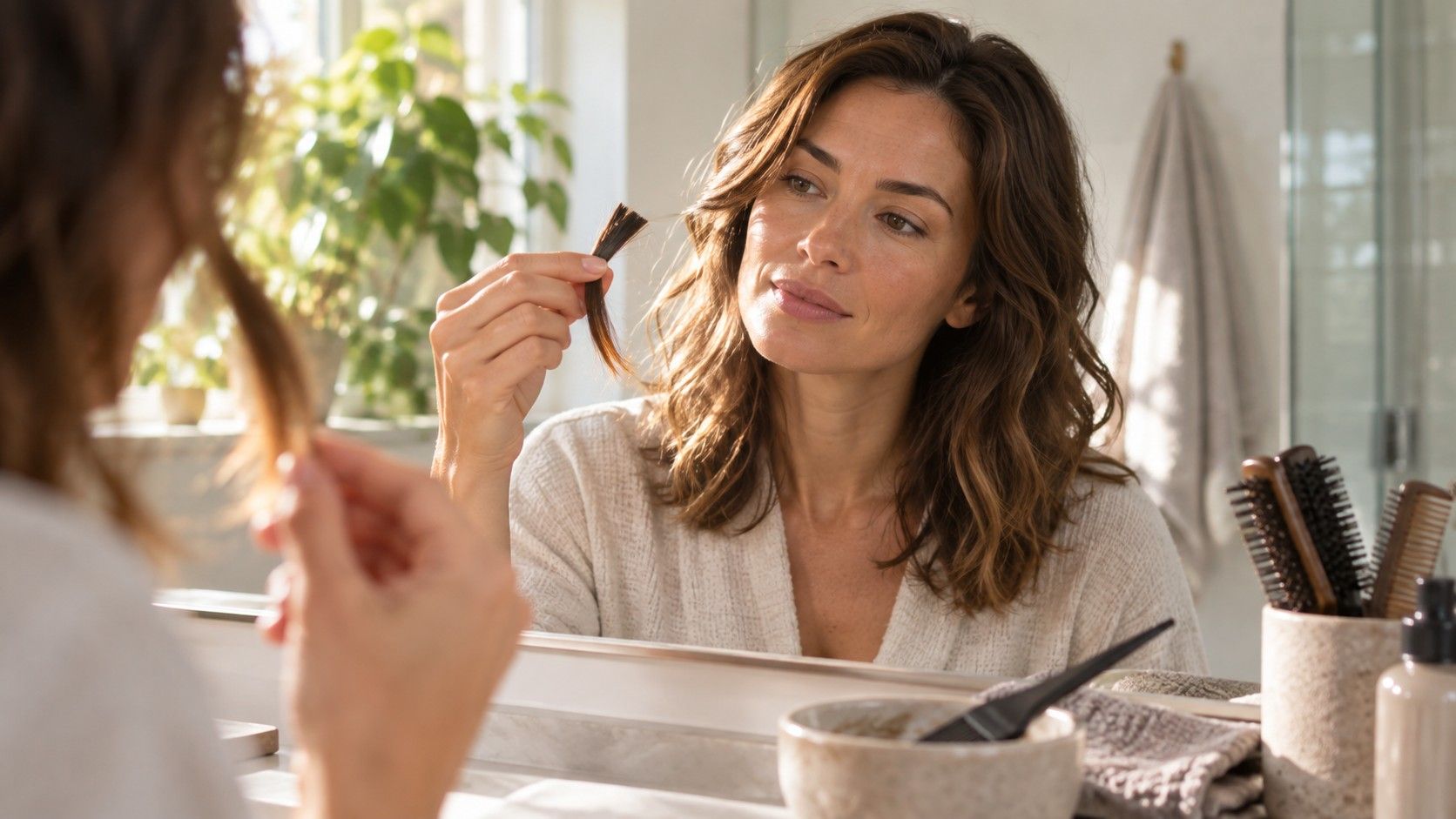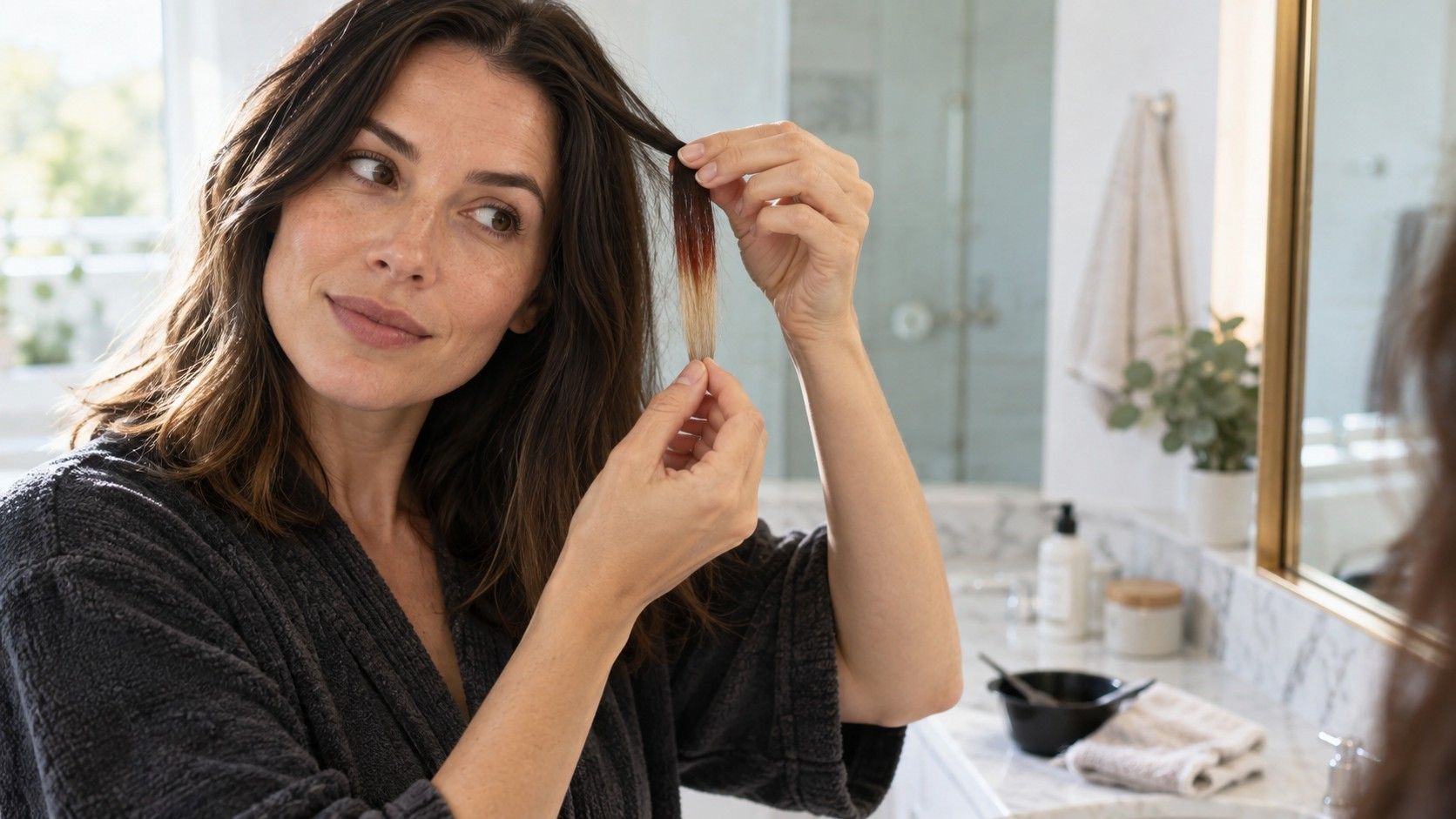
A hair dye patch test and a hair dye strand test are often squeezed together into one hurried ritual, usually ten minutes before someone wants to color their hair. They answer different questions. The patch test is about whether your skin may react to a product; the strand test is about what the product will do to your actual hair. Skipping either can turn a small home-color plan into an itchy scalp, an unexpected dark band, or a color correction appointment that costs more than the original box.
Why a patch test is about safety, not the final shade
A patch test checks for delayed skin sensitivity to ingredients in a dye, particularly common sensitizers such as paraphenylenediamine in some oxidative formulas. It cannot promise that no reaction will ever happen, but it is an important warning step. Follow the instructions supplied with the exact product you plan to use. Different formulas and brands can have different directions, and a product you used years ago is not a permanent pass.
Usually the test involves a tiny prepared amount placed on clean skin behind the ear or in the inner elbow area and left for the period stated on the package, often up to 48 hours. Do not choose broken, irritated, sunburned, or freshly shaved skin. Keep the area dry if the directions require it, and do not cover it with a tight bandage that could create irritation on its own.
Redness, swelling, burning, itchiness, blistering, or a rash are reasons not to color with that product. A reaction can appear after you have forgotten about the spot, which is precisely why “it looked fine after twenty minutes” is not the same as completing the test. If there is trouble breathing, facial swelling, widespread hives, or severe symptoms, seek urgent medical help rather than trying to rinse and wait it out.
A strand test answers the question the box photo cannot
A strand test shows color result, processing behavior, and the condition of the hair in a way no product chart can. Your natural level, gray percentage, old highlights, previous permanent dye, direct dyes, sun fading, and porous ends all influence what happens. Two people can use the same “medium ash brown” and get a cool brown, a greenish dull cast, or barely any change.
Choose a small strand that represents the part of the hair you care about. For all-over color, use a piece from the mid-length or front area as well as a discreet one near the nape if those zones have different histories. A hidden healthy strand is not enough when the visible ends are bleached and dry. Section the test cleanly, prepare the formula exactly as planned, and time it from application rather than from when you open the bottle.
| Check | What it tells you | What it cannot tell you |
|---|---|---|
| Patch test | Whether the skin shows a possible sensitivity warning | The final hair shade or how evenly color will take |
| Strand test | Depth, warmth, coverage, fading risk, and hair response | Whether you will develop an allergic reaction |
| Both tests | Whether it is sensible to proceed with this product now | A guarantee that every part of the head will behave identically |
Rinse and dry the strand before judging it. Wet hair looks darker and cooler. Look at it in daylight and under the indoor light you use most. If the result is borderline, shampoo the strand once and check it again the next day. That extra wash is especially useful with semi-permanent colors, because surface pigment can look much stronger immediately after application than it will after the first proper cleanse.
Set up the test like a small version of the real appointment
Use the same developer strength, mixing ratio, application method, and processing time you intend for the whole head. A test with half the processing time is not a true test; it is a different formula. Wear gloves, use a nonmetal bowl if the product directs you to, and make a note of when the mixture was prepared. Some color loses predictable behavior when it sits too long in the bowl.
Keep your hair history in view. A section that was balayaged two summers ago may look close to your natural shade now while behaving like porous lightened hair under dye. Roots with gray can resist color while the ends soak it up. If the test shows dark, flat ends and weak root coverage, an all-over application is unlikely to solve it. You may need a different application order, a gentler gloss for lengths, or professional advice.
Do not use a test result to justify adding extra processing time on the full head. If a dye is too warm, too dark, or too light on the strand, more minutes may increase the problem instead of correcting it. A cooler shade name, a different depth, or a different goal may be the real answer. The point is to learn before the entire head is committed.
Document the details you will forget by next month
Write down the brand, shade family, developer volume if there is one, the mixing ratio, date, starting hair condition, and exact processing time. Take a photo of the dry strand in daylight against a plain white or gray background. Include a small note about where it came from: front highlight, gray temple, natural root, or old bleached end. A filtered bathroom photo will not help much when you are trying to repeat or avoid the result later.
This record is useful even if the test is perfect. Hair changes with each coloring session, trim, holiday, medication change, and season of sun exposure. When a formula begins to fade warmer or the ends start taking pigment faster, the notes help identify what changed. They also make a salon consultation clearer: “this blue-black direct dye was applied to lightened ends four weeks ago” is much more useful than “I used something dark.”
For gray coverage, leave the test strand long enough to see the root area separately from the mid-length. Check after it is dry, not only under a towel. Some colors look opaque in the first hour then reveal translucent gray coverage after the first shampoo. Knowing that in advance lets you choose whether a soft blend is acceptable or whether the target needs a more specific gray-coverage formula.
What to do when either test raises a concern
If the patch test causes a reaction, do not apply the product to your head, even if the planned event is tomorrow. Rinsing it off quickly does not establish that a full application will be safe. Keep the package or photograph the ingredient list and speak to a clinician or qualified hair professional about suitable options. Do not casually test a second dye from the same family on irritated skin.
If the strand test creates burning, breakage, unusual heat, gummy texture, or severe dryness, rinse immediately and pause the plan. Those are signs that the hair may not tolerate another chemical service. A rich conditioner can improve feel, but it cannot undo a major compatibility problem. Give the hair time and consider a professional assessment before attempting bleach, permanent color, or a remover over the same area.
A bad color result without physical damage is still useful information. If the strand turns orange, the planned lift may be too weak for the target. If it turns nearly black, the hair may be porous or the shade too deep. If it is patchy, the hair likely has mixed history. Change one variable at a time rather than stacking a remover, another dye, and a toner into one anxious afternoon.
A simple decision before you color the whole head
Proceed only when both checks give you a comfortable answer: no sign of a skin reaction after the specified waiting period, and a dry strand that looks close to the color and condition you can live with. Make sure you have enough product for your hair length, a timer, gloves, old towels, and a plan for the first wash. Rushing because the test looked “probably fine” is how small uncertainties turn into uneven results.
If the strand result is good but you are nervous about a full change, start with a gloss, a few lowlights, or a semi-permanent shade close to your natural level. A less dramatic first step often provides the same useful information with a kinder grow-out. Testing hair dye before coloring is not an obstacle to the fun part. It is the quiet, practical step that gives you a much better chance of enjoying it afterwards.